AC Blowing But Not Cooling? 7 Checks Before You Call
AC blowing but not cooling? Try these 7 simple checks before you call a technician and learn when it’s time to bring in a professional.
AC Blowing but Not Cooling? 7 Things to Check First
We recently got a call from a homeowner — let’s call him Tom — who was pretty frustrated. His AC was running, the fan was blowing, he could hear the outdoor unit kicking on, but the air coming out of the vents was lukewarm and humid. His first words to us were, “Maybe it’s low Freon or something, I don’t know.”
We hear this kind of call a lot. Before we send a technician, we like to walk through a few simple checks. Sometimes it really is a refrigerant issue, but just as often, it’s something a homeowner can spot and fix in a few minutes.
In Tom’s case, we did end up sending a tech, but by the time we arrived, he’d already taken care of one big issue we suggested over the phone: a completely clogged filter. With that in mind, here are seven things you can safely check when your AC is blowing but not cooling.
1. Check the Thermostat Settings
It sounds basic, but we always start where we started with Tom: the thermostat.
- Make sure it’s on “Cool”, not “Fan” or “Heat.” On “Fan” only, the system will blow room-temperature air.
- Set the temperature at least 3–5 degrees below the current room temp.
- Check the mode and schedule if you have a smart thermostat; a programmed setback can override what you think it should be doing.
If a quick thermostat adjustment doesn’t bring cooler air within 10–15 minutes, move on to the next checks.
2. Look at Your Air Filter
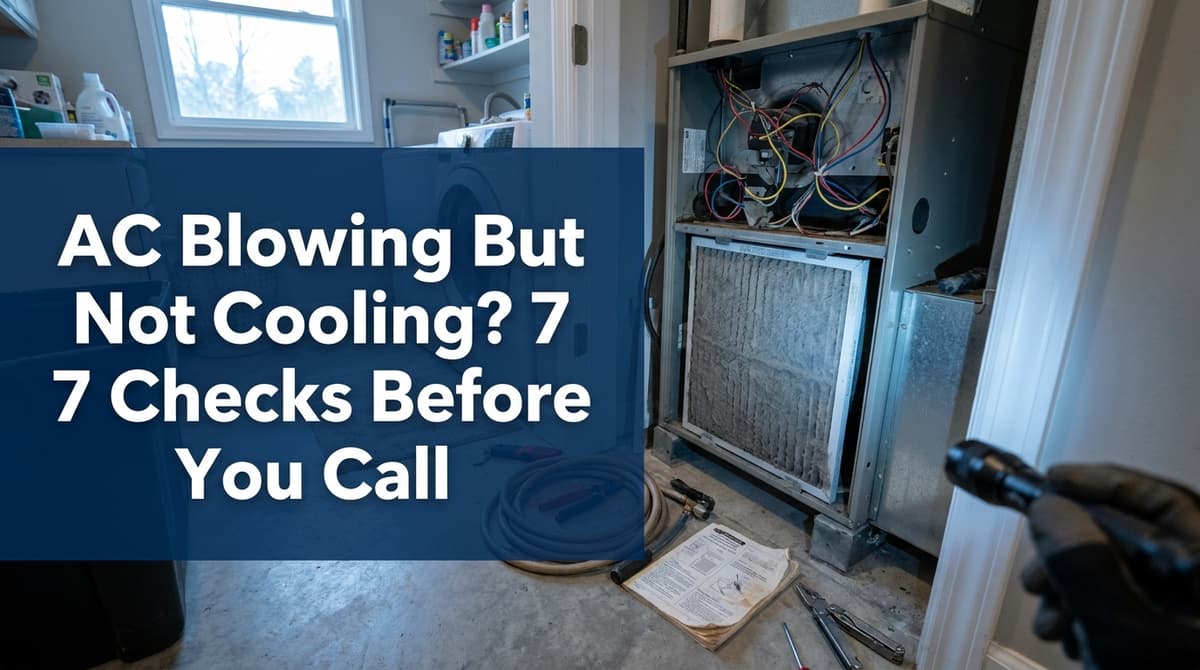
When Tom pulled his filter, he told us, “I don’t think this has been changed in a long time.” It was caked with dust, which can choke airflow and make the system run but not cool well.
- Locate the filter at the return grille or in a slot by the indoor unit.
- Slide it out and inspect. If you can’t see light through it, it’s too dirty.
- Replace it with the same size, matching the airflow arrow to the system.
After changing the filter, give the system 15–20 minutes. If the air starts to feel cooler and less humid, you may have solved the problem.
3. Check the Outdoor Unit for Blockages
Tom’s next question for us was, “Do I need to go outside and look at that box?” The answer is yes. Your outdoor condenser needs plenty of airflow to get rid of heat.
With the power on (you’re just looking, not opening anything):
- Make sure the fan is spinning when the indoor blower is running.
- Clear debris like grass clippings, leaves, and weeds from around the unit (at least 2 feet of clearance).
- Visually inspect the fins on the sides; if they’re completely clogged with lint and dirt, cooling will suffer.
If the fan is not spinning at all, or you hear loud buzzing or grinding, stop there and call a professional. That’s not a DIY fix.
4. Feel the Air at Different Vents
We asked Tom to walk around and feel a few vents: “Is the air the same everywhere, or are some rooms worse?” This simple test can tell you a lot.
- Even, weak airflow from all vents often points to a system-wide issue like a dirty coil or low refrigerant.
- Strong in some rooms, weak in others might mean closed or blocked vents, or a duct problem.
- No airflow from one vent could indicate a disconnected or crushed duct.
Make sure furniture, rugs, or curtains aren’t blocking supply or return vents. Sometimes simply opening up blocked vents improves comfort immediately.
5. Check for Ice or Frost on the Indoor Unit
Another question we asked Tom: “If you can see your indoor unit or the copper pipes, do you see any ice?” A freezing coil can make the system blow lukewarm, humid air.
Safely access the indoor unit if you can (often in a closet, basement, or attic):
- Look at the copper refrigerant lines and the coil area (without opening sealed panels).
- If you see ice or heavy frost, turn the thermostat OFF and set the fan to ON to help it thaw.
Once everything is thawed (this can take a few hours), you can try cooling again. If the coil ices up a second time, you’ll need a technician to diagnose the root cause, such as low refrigerant or airflow issues.
6. Listen for Unusual Noises
While Tom’s system sounded “normal,” some callers report new noises when their AC stops cooling well.
- Banging, grinding, or screeching can point to motor or fan problems.
- Hissing near the refrigerant lines may indicate a leak.
- Repeated clicking could mean an electrical or control issue.
If you hear anything that sounds harsh or unsafe, shut the system down and schedule service. Running it could cause further damage.
7. Check Your Breakers and Power Switches
Sometimes the indoor fan will run, but the outdoor unit loses power. That can make it feel like the system is on, but it never cools down.
- Check your electrical panel for tripped breakers labeled “AC,” “air conditioner,” or “condensing unit.”
- If a breaker is tripped, reset it once by flipping it fully off, then back on.
- Outside, look for the service disconnect box by the condenser; make sure it hasn’t been pulled out or switched off.
If a breaker trips again after you reset it, don’t keep flipping it. That’s a sign of an electrical problem that needs professional attention.
When to Call a Technician
With Tom, changing the filter and clearing debris around the outdoor unit helped, but the air still wasn’t getting as cold as it should. When our technician arrived, we found a refrigerant issue that required repairs and a proper recharge.
It’s time to call a pro if:
- You’ve checked the thermostat, filter, vents, and breakers, but the air is still warm.
- You see ice on the lines or coil more than once.
- You hear loud or unusual noises from the indoor or outdoor unit.
- Your system runs nonstop and your energy bill jumps, but the house won’t cool.
As homeowners, there’s a lot you can safely check before you pick up the phone, and we’re always happy to walk you through those steps. When those quick checks don’t solve it, that’s where we come in — with the tools and training to get your home comfortable again as quickly and safely as possible.