Why Your AC Blows Warm Air When Everything Looks Fine
AC running but still 85°F inside? Learn why systems blow warm air even when everything “looks” fine, and what homeowners and property managers should check first.
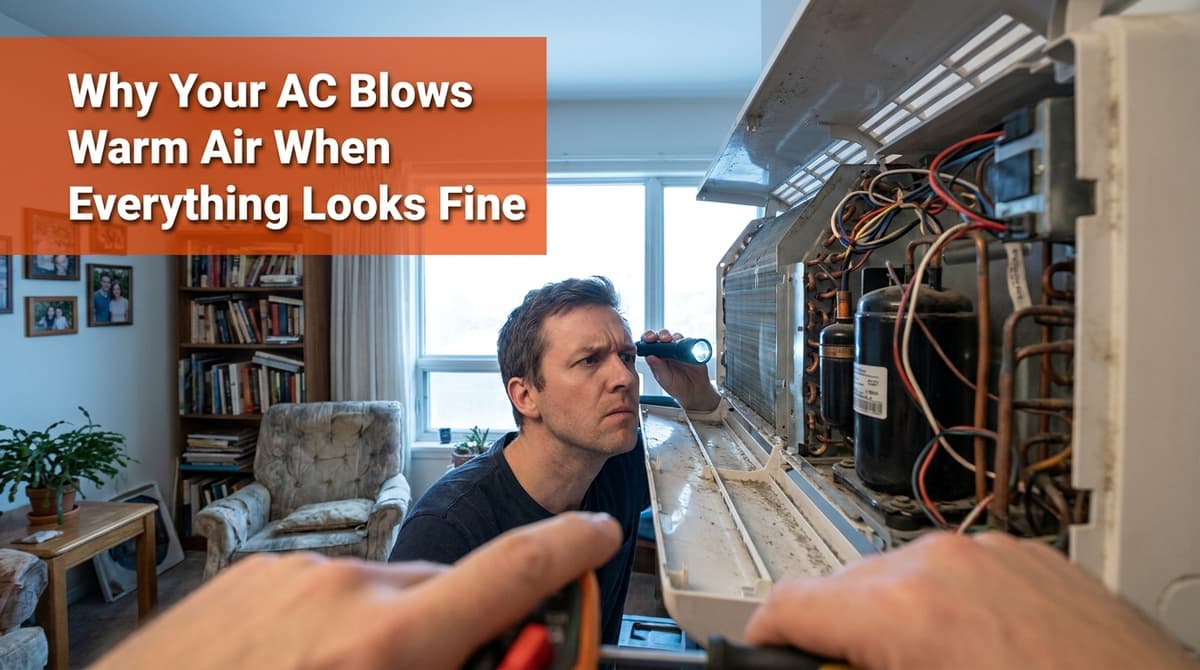
When the AC Blows Warm Air but “Everything Looks Fine”
We recently got a call from a property manager — we’ll call her Lisa — who manages a few hundred homes across two states. One of her residents had an AC that was running, the thermostat seemed fine, the filter was clean, and there was plenty of air coming out of the vents… but the air was 85°F, the same as outside.
Lisa’s in-house tech had already checked the basics and was scratching his head. From the outside, the system “looked” fine, but the space wasn’t cooling at all. That’s when she reached out to us for a diagnostic and estimate.
We see situations like this all the time, especially in rental properties and HOAs where there’s pressure to solve problems quickly and keep residents comfortable. So we put together this guide to help both homeowners and property managers understand what’s really going on when an AC blows warm air even though nothing looks obviously wrong.
First Checks: What You Can Safely Verify
Before anyone calls us, we usually walk them through a few quick checks. In Lisa’s case, her tech had already done most of these — which helped us narrow things down fast.
1. Thermostat Settings and Power
It sounds basic, but it’s worth confirming:
- Mode: Make sure it’s set to COOL, not HEAT or FAN.
- Fan: Try AUTO instead of ON. ON can make it feel like the AC is working while just circulating warm air.
- Setpoint: Set the temperature at least 3–5°F below the current indoor temp.
- Power: If the thermostat display is blank or fading, replace batteries (if it uses them) or check the breaker.
In Lisa’s case, the thermostat was working properly and calling for cooling, so we could move on.
2. Filter, Supply, and Return Vents
You want good airflow, but not restricted or blocked:
- Air filter: Confirm it’s clean, correctly sized, and installed in the right direction.
- Vents: Make sure supply vents are open and not blocked by furniture or rugs.
- Return grille: Keep returns clear of boxes, curtains, or large furniture.
Lisa’s tech had already verified the filter was clean and vents were open. The system was moving air — it just wasn’t cooling it.
When Air Is Moving but Not Cooling
If the blower is running and you feel a strong stream of air, but it’s room temperature or warmer, that usually points to a cooling-side problem, not an airflow problem.
3. Is the Outdoor Unit Actually Running?
On many calls like this, we arrive to find the indoor blower running but the outdoor condenser silent. From inside, everything seems fine — air is blowing. Outside, though, nothing is happening to remove heat from the home.
Here’s what a manager or homeowner can safely note from outside (without taking panels off):
- Fan on top spinning? If the outdoor fan isn’t turning while the thermostat is calling for cooling, there’s an issue.
- Loud humming or clicking? That can point to a bad capacitor or contactor.
- Breaker tripped? Check the electrical panel for any tripped breakers for “AC” or “Condensing Unit.” Reset once if you’re comfortable doing so. If it trips again, stop and call a pro.
On Lisa’s property, the outdoor unit was running, fan spinning — so why was the indoor temp still 85°F?
4. Common Technical Causes of Warm Air
Once the basics are ruled out, the problem is usually something that requires tools and gauges. Some of the most common reasons we find are:
- Low refrigerant or a leak: The system can’t absorb and move heat effectively, so the air never gets cold. You may also see ice on the lines or hear hissing.
- Failed capacitor: The outdoor compressor or fan may struggle to start or run weakly, reducing cooling even if it “looks” like it’s running.
- Dirty outdoor coil: If the coil is matted with dirt, grass clippings, or cottonwood, the system can’t dump heat outside and indoor temperatures stay high.
- Frozen indoor coil: Restricted airflow or low refrigerant can cause the evaporator coil to freeze. Ironically, this leads to warm air because airflow and heat transfer stop.
- Failed compressor: The outdoor fan may spin, but if the compressor isn’t compressing refrigerant, you’ll get air movement with no cooling.
In a situation like Lisa’s — same temp inside and out, unit running, filter clean — we’re usually looking at a refrigerant issue, a failing compressor, or a seriously dirty coil.
Extra Considerations for Property Managers
For managers, diagnosing on the phone can be tricky. You’re trying to balance resident comfort, budget, and speed. Here’s how we recommend handling warm-air calls in multi-property settings:
- Gather consistent info: Ask your resident or field tech: Is the thermostat on COOL? Is the outdoor unit running? Any ice visible on the lines? Any unusual noises or smells?
- Document ambient temps: Note indoor and outdoor temperatures, like Lisa’s 85°F inside and out. That helps us understand how far behind the system is.
- Have a go-to vendor: A trusted HVAC partner who knows your approval process can get you a fast diagnostic and clear estimate.
- Clarify limits on “DIY”: Make sure residents aren’t trying to add refrigerant, open panels, or bypass safeties. That can create bigger problems and liability.
When to Stop Troubleshooting and Call a Pro
Once you’ve verified thermostat settings, checked the filter and vents, confirmed breakers are on, and observed whether the outdoor unit is running, you’ve done everything a homeowner or manager should reasonably do.
If the system is still blowing warm air and indoor temperatures are matching outside, it’s time for a professional diagnostic. That’s where we come in: we connect gauges, check electrical components, measure temperature differences, and determine whether you’re looking at a small repair, a refrigerant leak, or a bigger system issue.
With Lisa’s property, our next step was exactly that: schedule a visit, perform a structured diagnostic, and provide a clear written estimate so she could keep her resident informed and make a smart decision for the property.
If you’re juggling multiple homes or just trying to keep your own family comfortable, don’t ignore an AC that’s running but not cooling. The sooner we track down the cause, the more likely we can fix it before it turns into a costly breakdown.