AC Condenser Short Cycling & Overheating: Homeowner Guide
If your AC condenser is short cycling and overheating, you may be close to a compressor failure. Learn common causes, risks, and what to do before damage is done.
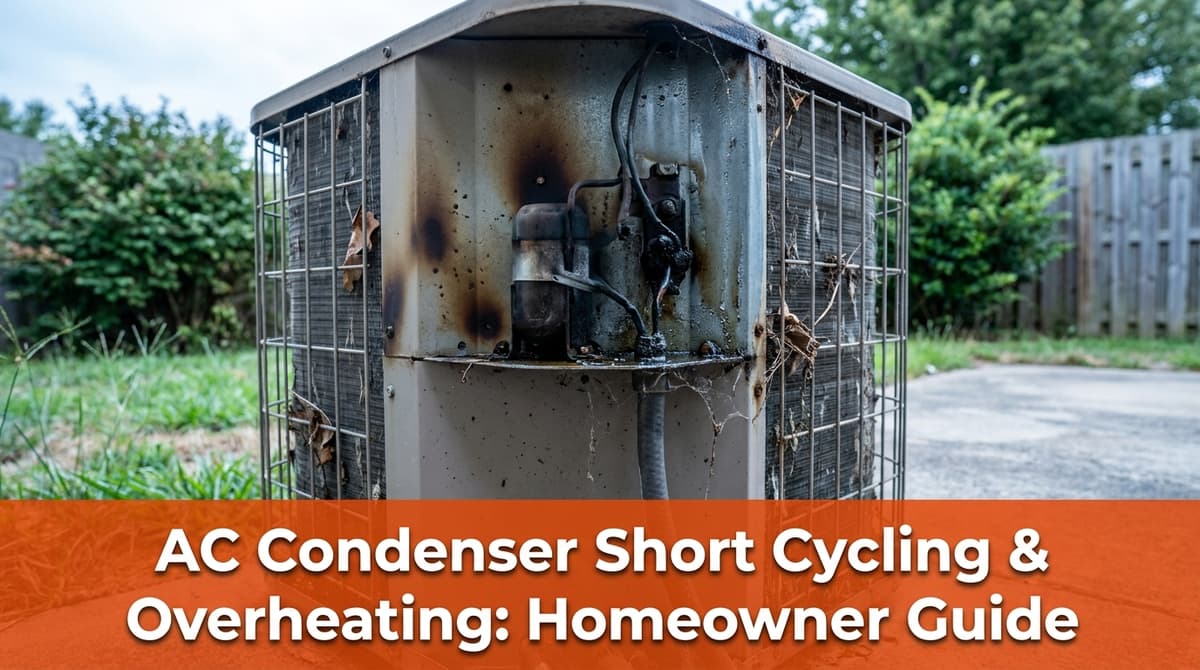
When Your AC Condenser Keeps Clicking On and Off
We recently got a call from a homeowner — let’s call him Ryan — who was understandably nervous about what his outdoor AC unit was doing.
Ryan told us his system is about eight years old. The house was still cooling inside, but when he stepped out into the yard, he noticed the condenser was getting really hot and was short cycling — turning on and off every few seconds. Because he knew that can be bad for the compressor, he did the right thing and shut the system down before calling us.
Ryan’s also a home inspector, so he keeps up with filters, insulation, and basic maintenance. Even with all that, this problem still popped up. We see this scenario a lot, and we walked him through what we usually check on service calls like his — and what homeowners should (and shouldn’t) do when their condenser starts short cycling and overheating.
What We Mean by Short Cycling and Overheating
When we talk about short cycling on an AC condenser, we mean the outdoor unit is:
- Starting up
- Running for only a few seconds (often under 10 seconds)
- Shutting back down
- Repeating that over and over
In Ryan’s case, the system was still moving cool air inside — at least for the moment — but the condenser outside was getting unusually hot to the touch. That combination is a red flag for us, because it usually means the condenser is working much harder than it should and the compressor is at risk.
Anytime we hear “it’s short cycling every few seconds” on the phone, we start thinking about the most common culprits and how to keep the unit from cooking itself before we get there.
Common Causes We Find on Calls Like This
On service calls like Ryan’s, we typically work through a mental checklist. Short cycling and overheating are usually tied to one (or several) of these issues:
1. Electrical or control problems
We often find:
- Bad capacitor – The run or start capacitor helps the compressor and fan motor start and stay running. When it’s failing, the unit may try to start, stumble, and shut off.
- Sticking or failing contactor – The contactor is like a heavy-duty switch. If its contacts are burnt or pitted, power to the compressor and fan can be intermittent.
- Control board or thermostat issues – Miscommunication between the thermostat, control board, and condenser can cause rapid cycling.
2. Overheating compressor
When the condenser can’t get rid of heat efficiently, the compressor runs hotter and hotter until thermal protection kicks in and shuts it off. That can create a pattern of:
- Compressor starts
- Quickly overheats
- Trips internal overload
- Cool-down period, then restart
We see this when the refrigerant charge is off, the coil is dirty, or the fan isn’t moving enough air through the unit.
3. Airflow and outdoor conditions
Even a newer system can overheat and short cycle if:
- The condenser coil is clogged with grass, dirt, cottonwood, or pet hair
- There’s landscaping, fencing, or storage items packed too close to the unit
- The fan motor is weak or failing, so it isn’t pulling enough air through the coil
On a hot Arkansas summer day (or anywhere with high heat), any of these can push a condenser over its limit.
Why This Is Hard on Your Compressor
From our side of the toolbox, short cycling and overheating are compressor killers if they’re ignored. Here’s why we take calls like Ryan’s seriously:
- High starting amps on repeat – Every start-up draws more current than steady running. Fifteen or twenty starts in an hour really beat up electrical components.
- Poor lubrication – Compressors are designed to run for longer stretches, not in tiny bursts. Rapid cycling can starve moving parts of proper oil return.
- Higher internal temperatures – Overheating breaks down refrigerant and oil, damaging windings and bearings over time.
Once a compressor fails, it’s one of the most expensive parts on your AC system. In many cases, a failed compressor on an older unit pushes homeowners into a full replacement. That’s why we would rather meet your system while it’s misbehaving than after the compressor is already done.
What We Tell Homeowners to Do First (Before We Arrive)
When someone calls us with symptoms like Ryan’s, here’s how we usually walk them through the next steps over the phone:
1. Turn the system off if it’s rapidly cycling
If your condenser is turning on and off every few seconds, shut it down at the thermostat. Ryan did exactly what we recommend: he turned the system off to protect the compressor until we could get there.
2. Check the basics you can safely see
With the power off at the thermostat (and ideally at the outdoor disconnect if you’re comfortable):
- Look for obvious damage – Burnt wiring, swollen capacitor, or anything clearly broken is a sign to leave it to us.
- Check around the unit – Make sure there are 2–3 feet of clearance on all sides and 4–5 feet above it. Move yard clutter or plants away, but don’t open panels.
- Check your air filter – A clogged filter inside can contribute to system strain. Replace if it’s dirty.
We don’t recommend that homeowners pull covers, disconnect wiring, or poke around electrical parts. We’d much rather you stay safe and let us handle the internals.
3. Note what the system is doing
When you call us, details help us prepare. We’ll usually ask:
- How old the system is
- Whether it’s cooling inside at all
- About how long each run cycle lasts
- Whether you’ve heard any buzzing, humming, or clicking outside
Ryan’s description — “less than 10 seconds on and off, and the unit feels too hot” — told us we needed to get there quickly.
How We Diagnose Short Cycling and Overheating
On site, our technicians move through a structured set of checks so we’re not just tossing parts at the problem. On a call like Ryan’s, we’ll typically:
- Verify voltage and tighten electrical connections
- Test capacitors, contactor, and fan motor under load
- Inspect the condenser coil and measure actual airflow
- Check refrigerant pressures and temperatures against manufacturer specs
- Confirm thermostat and control board are calling for cooling correctly
From there, we explain what we found, what’s urgent, and what your options are. Like Ryan, many homeowners prefer repair over replacement as long as it’s a smart, reliable fix. We’re on the same page — we just don’t want a temporary band-aid that leaves your compressor at risk.
When to Call for Help (and When It Can Wait)
If your outdoor unit is short cycling every few seconds or feels extremely hot, that’s not something to monitor for a few days. Turn it off and schedule service right away.
If you just notice slightly shorter run times but the system is cycling normally (several minutes on, several minutes off) and cooling well, it may be a thermostat or sizing issue that we can check out on a regular service visit.
Either way, if your gut says, “This doesn’t sound right,” we’d rather you call us early. Catching short cycling and overheating when they first show up is usually the difference between a straightforward repair and a major compressor failure.