AC Drain Pan Dripping in the Garage? Causes & Fixes
Water dripping from your AC drain pan into the garage? Learn common causes, risks to your home, what to try safely yourself, and when to call for professional service.
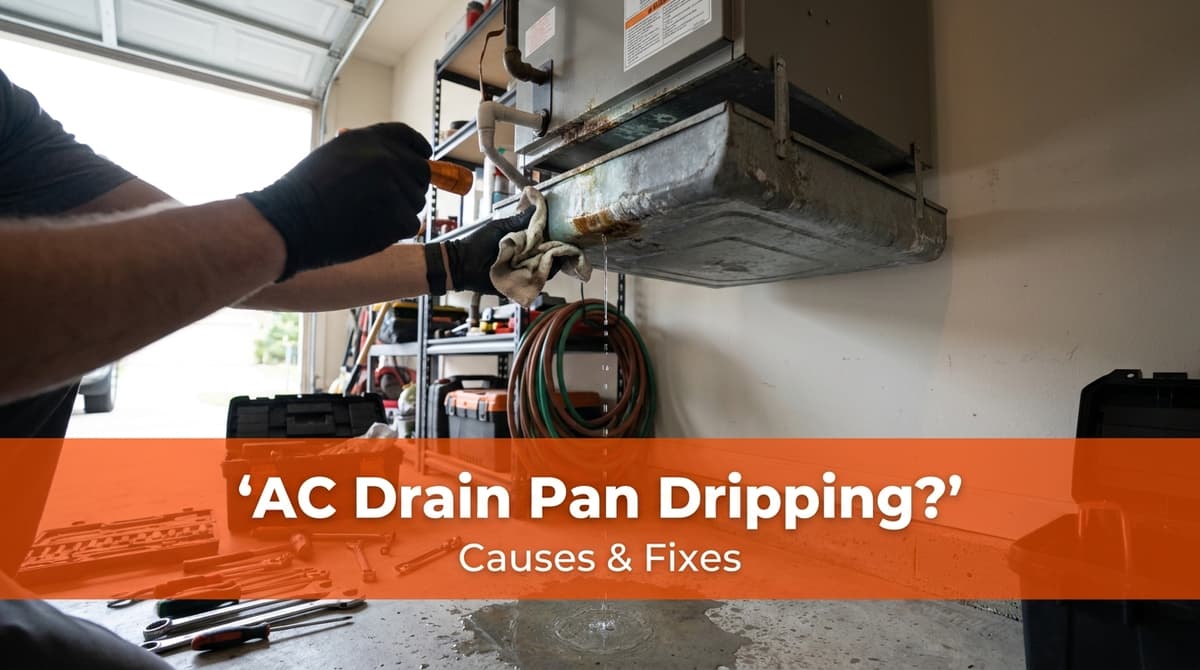
Why Is My AC Drain Pan Dripping Into the Garage?
We recently got a call from a homeowner — let’s call him Jason — who came home to find water dripping out of the emergency drain line in his garage. His AC was in the attic, and the pan underneath the unit was full enough that water was making its way down to the garage and dripping on the floor.
Jason had already climbed up in the attic, tried to blow out the drain line going outside and the one that terminates in the garage, but the pan was still dripping. Inside the house was “fairly cold,” but the system had run all day and struggled to get below 75°F even though the thermostat was set to 73°F.
If this sounds a little too familiar, you’re not alone. Let’s walk through what was likely going on at Jason’s house — and what you should do if you see your AC drain pan leaking or that little pipe in the garage suddenly starts dripping.
Main Causes of a Leaking AC Drain Pan
Your air conditioner doesn’t just cool the air; it also removes moisture. That moisture drips into a primary drain pan and flows out through a condensate drain line. When everything is working right, you’ll never notice it.
Water in the emergency pan or dripping into the garage almost always means something isn’t working right upstream.
1. Clogged Primary Drain Line
This is the most common issue we see, and it’s what we suspect with situations like Jason’s. Over time, the main drain line can build up:
- Algae and slime
- Dust and debris from the attic or air handler
- Rust or scale from metal components
When that primary line clogs, the water has nowhere to go. It backs up into the primary pan and eventually spills into the secondary (emergency) pan. That emergency pan is usually what drains to the garage or a visible point outside to warn you something is wrong.
2. Damaged, Rusted, or Cracked Pan
If your system is older, the metal drain pan can rust through or crack. Then even a normal amount of condensation can leak out in the attic or into the garage. Plastic pans can crack as well from age, movement, or someone stepping or setting weight on them during other work (like roofing or attic work).
3. Improper Slope or Loose Drain Line
We occasionally see installations where the drain line isn’t pitched correctly, sags, or has come loose after someone’s been up in the attic. That can cause water to sit, grow algae, and eventually overflow into the emergency pan.
4. Heavy Cooling Load Masking a Drain Problem
In Jason’s case, the home was “fairly cold,” but the AC ran constantly and couldn’t quite reach the set temperature until late evening. That can happen when:
- The coil is beginning to get dirty or partially iced up from poor drainage
- Airflow is restricted (dirty filter, closed vents)
- The system is fighting very high attic or outdoor temperatures
The key clue is: if the emergency drain is dripping, there’s a drainage problem, even if it’s still cooling somewhat.
Why a Dripping Garage Drain Line Is a Real Risk
Jason was right to be concerned. The emergency drain doing its job is a warning sign you don’t want to ignore. Here’s why:
- Ceiling and wall damage: Water backing up in the attic can soak insulation, stain ceilings, and damage drywall long before you see a steady drip in the garage.
- Mold and mildew growth: Persistent moisture around the air handler and in the attic is a perfect environment for mold.
- Electrical hazards: In some cases, water can reach wiring or controls in or around the air handler.
- System shutdown: Many systems have a float switch in the pan that will shut the AC off when water gets too high. That saves your ceiling, but you’ll lose cooling in the meantime.
So even if your house “still feels pretty cool,” don’t treat a dripping emergency drain as a minor inconvenience. It’s the system throwing up a red flag.
What You Can Safely Try Before Calling for Service
Jason had already tried one of the first things many homeowners do: he went up in the attic and tried to blow out the lines. Sometimes that can help dislodge a minor clog, but there are a few safer, more effective steps you can try first.
1. Turn the System Off If the Pan Is Close to Full
If you look in the attic and see the emergency pan with a lot of standing water, it’s smart to:
- Turn the AC off at the thermostat
- Place a bucket or towels under any active drips in the garage
This reduces the amount of new condensation being produced while you arrange service and helps protect your ceiling.
2. Check and Replace the Air Filter
A severely clogged air filter can cause the indoor coil to get too cold and ice up. When that ice melts, it can overwhelm a partially obstructed drain. Make sure:
- The filter is clean and properly installed
- You’re using the correct size and type for your system
3. Try Clearing the Drain Line with a Wet/Dry Vacuum
Outside your home, find the PVC pipe where the main condensate line exits near the ground. You can often:
- Place a wet/dry vacuum nozzle over the pipe
- Wrap a rag around it to improve the seal
- Run the vacuum for 30–60 seconds to suck out algae and debris
Check the vacuum tank for gunk and water. If a good amount comes out, you may have cleared the blockage. Keep an eye on the emergency pan to see if water levels begin to drop over the next hour or so.
4. Don’t Use Harsh Chemicals
We don’t recommend pouring random household chemicals down the drain line. A small amount of diluted vinegar can help with algae prevention, but strong chemicals can damage piping, fittings, or surrounding materials.
When It’s Time to Call a Professional
In Jason’s situation, even after his DIY attempts, the emergency pan was still dripping — so scheduling a service visit was absolutely the right move. You should call a professional if:
- The emergency drain has been dripping for more than a day
- You see standing water in either the primary or secondary pan
- Your AC is running constantly but can’t keep up with the thermostat
- You’re uncomfortable climbing in the attic or working around the unit
During a visit, we typically:
- Clear and flush the primary condensate line thoroughly
- Inspect the pans for rust, cracks, or improper slope
- Check float switches and safety devices
- Inspect the coil and overall system performance
How to Prevent Future Drain Pan Leaks
The issue Jason was dealing with is something we see most often on systems that haven’t had a recent tune-up. To reduce the odds of another surprise drip in your garage:
- Schedule annual AC maintenance: We’ll clear the drain line, clean the coil, and check the pans as part of a routine visit.
- Keep the area around the indoor unit clear: Avoid stacking boxes or insulation against the unit or pan.
- Change filters regularly: Usually every 1–3 months, depending on the type, pets, and dust levels.
- Watch that emergency drain: If you notice even a little drip from the pipe in the garage or eave, it’s a sign to take action.
If you’re seeing water where it shouldn’t be — especially in the attic or dripping into the garage — don’t wait. A relatively simple drain issue today can turn into a costly ceiling repair tomorrow. We’re always happy to come out, figure out exactly what’s going on, and get your system draining and cooling the way it should.