AC Evaporator Coil Leaking or Freezing? Repair or Replace?
Evaporator coil leaking or freezing up? Learn when to repair or replace, how warranties help with cost, and what to expect from a diagnostic visit.
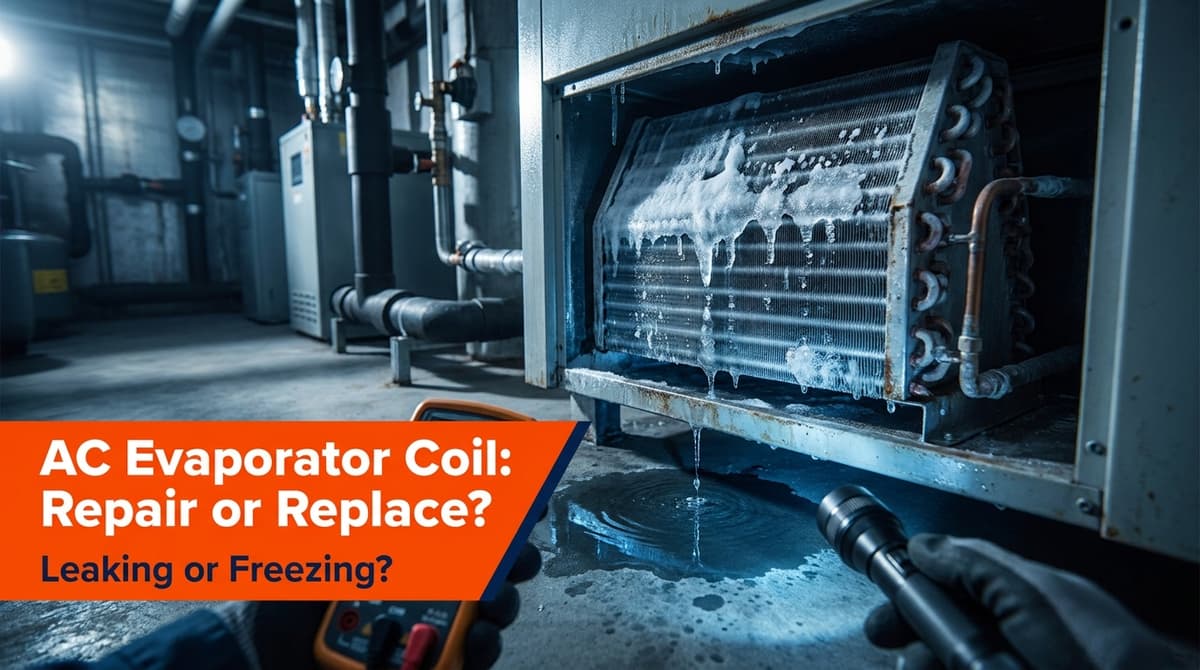
We recently got a call from a homeowner — let’s call him Mark — who was pretty frustrated with his AC. Another company had already been out to look at his system and told him his Carrier evaporator coil was leaking and freezing up. They recommended replacing the coil, but Mark wasn’t sure if that was really necessary, whether it might be repairable, or how his warranty would factor into the cost.
Mark wanted a second opinion and a straight answer: repair vs. replace, what it might cost, and what he should do next. That’s a situation we see a lot, especially in the middle of cooling season, so we walked him through his options and offered to either quote the work based on the other company’s diagnosis or send a technician out for our own $59 diagnostic visit.
Signs Your Evaporator Coil Is Leaking or Freezing Up
When we talk with homeowners like Mark, they usually notice symptoms before anyone ever mentions the words “evaporator coil.” Here are some of the most common signs we hear about when a coil is leaking or freezing:
- Weak or warm airflow from the vents, even though the system is running.
- AC runs constantly but struggles to reach the thermostat setting.
- Ice buildup on the indoor unit or refrigerant lines (often first seen by a tech, but sometimes a homeowner notices frost or ice).
- Water on the floor near the indoor unit after the ice melts.
- Hissing sounds or bubbling noises that can point to a refrigerant leak.
- Higher electric bills because the system is working harder with less cooling output.
If you’re seeing one or more of these, it doesn’t automatically mean the coil is the culprit, but it’s a strong possibility, especially if another company has already suggested it.
What We Did for “Mark”: Second Opinion vs. Full Diagnostic
In Mark’s case, the other company had already diagnosed the issue as a leaking Carrier evaporator coil that was freezing up. He called us asking if we could give him a quote without sending another tech out, and we told him we had two options:
- Apples-to-apples quote based on the other company’s diagnosis and his equipment information.
- Our own $59 service call for a full diagnostic to confirm the problem and check for anything the first visit might have missed.
For the quote option, we asked Mark to email us the paperwork he’d received and a picture of his system’s data plate. That allowed us to look up the exact model, verify whether Carrier would honor the warranty through us, and build an accurate estimate without making him pay for another service call right away.
For homeowners who want extra peace of mind, we also offer to send a technician out for a fresh diagnosis. Sometimes we find something different than the first company did, or we confirm their diagnosis and can then talk through repair vs. replacement in more detail.
Repair vs. Replace: How We Help You Decide
When an evaporator coil is leaking or freezing, most homeowners want to know: can we repair it, or do we have to replace it? Here’s how we typically break it down, using Mark’s situation as a guide.
When Repair Might Be an Option
There are a few scenarios where repair can sometimes make sense:
- Minor issues around the coil, like a dirty coil, clogged drain line, or restricted airflow, causing freezing but not an actual coil leak.
- Loose connections or small issues in the refrigerant lines that can be corrected without replacing the coil itself.
- Relatively new system where a manufacturer or parts warranty makes repair costs very low and the rest of the system is in great shape.
During a diagnostic visit, our technicians check refrigerant levels, airflow, coil condition, filters, blower settings, and drain lines so we can tell you if the coil is truly leaking or just freezing from another cause.
When Replacement Is the Better Choice
More often, a confirmed leak in the evaporator coil points toward replacement. We lean that way when:
- The coil is actually leaking refrigerant, not just freezing from airflow issues.
- The system is older and already out of labor and sometimes parts warranty.
- Repair would be almost as expensive as replacement once parts, refrigerant, and labor are totaled.
- There have been multiple refrigerant leaks or repeated freeze-ups over the years.
With Mark’s Carrier system, we talked about the likelihood that a leaking coil would need to be replaced, then factored in his warranty coverage to show what his out-of-pocket cost might look like.
Understanding Warranty Options for Evaporator Coils
One of Mark’s big questions was whether his Carrier warranty would still apply if we did the work instead of the original installer. In many cases, the answer is yes, and we can help verify that.
Here’s how we handled it with him — and how we usually handle it for other homeowners:
- We asked for a photo of the data plate (the metal tag with model and serial numbers) on the indoor unit.
- We used that information to check Carrier’s warranty records and see what was still covered.
- We confirmed whether parts were under warranty and what Mark might owe for labor, refrigerant, and other materials.
This quick verification step can make a huge difference in price. Sometimes a coil that would be very expensive out of warranty is much more affordable because the manufacturer covers the part itself, and you only pay for labor and refrigerant.
What to Expect During a Service Visit
Homeowners often ask us how long a visit will take and what we’ll actually do. For a basic diagnostic visit (like our $59 call), most appointments run about 45–90 minutes, depending on how complex the issue is.
During that time, our technician will typically:
- Inspect the indoor unit and look for ice, oil spots, or corrosion on the coil and lines.
- Measure refrigerant levels and pressures to see if there’s a leak or charge issue.
- Check air filters, blower, and ductwork for airflow restrictions that can cause freezing.
- Test drain lines and pan to make sure water is leaving the system properly.
- Explain findings in plain language
- Provide clear repair or replacement options with pricing before any work begins.
If a coil replacement is needed and you choose to move forward, that work usually takes a few hours, and we’ll coordinate a time that minimizes disruption to your day.
Simple Ways to Prevent Freezing and Leaks
While not every coil problem can be avoided, there are a few things homeowners can do to lower the chances of a frozen or leaking evaporator coil:
- Change your air filter regularly (often every 1–3 months, depending on your home and filter type).
- Keep supply and return vents unblocked by furniture, rugs, or curtains so airflow stays strong.
- Schedule annual professional maintenance so we can clean the coil, check refrigerant levels, and catch small issues early.
- Watch for early warning signs like weaker airflow, odd noises, or water around the unit and call before things get worse.
These simple steps can’t fix a coil that’s already leaking, but they can help your system run more efficiently and reduce the risk of freezing from airflow problems.
Not Sure What to Do Next? Here’s Our Suggestion
If you’re in a situation like Mark — another company has said your evaporator coil is leaking or freezing up, and you’re unsure about repair vs. replace — here’s what we recommend:
- Gather your paperwork from any previous visits and take a clear photo of your system’s data plate.
- Reach out for a second opinion or quote so you can compare options and prices.
- Have the warranty checked before you authorize any big repairs, especially on brands like Carrier.
- Ask for a clear explanation of why repair or replacement is being recommended and what the long-term costs may look like.
We’re always happy to walk through those steps, just like we did with Mark, so you can make a confident decision about your home’s comfort and your AC investment.