AC Humming but Fan Won’t Start? Causes, Checks & Fixes
AC humming but fan won’t start? Learn the most common causes, safe DIY checks to try, and when to shut it down and call a professional to protect your system.
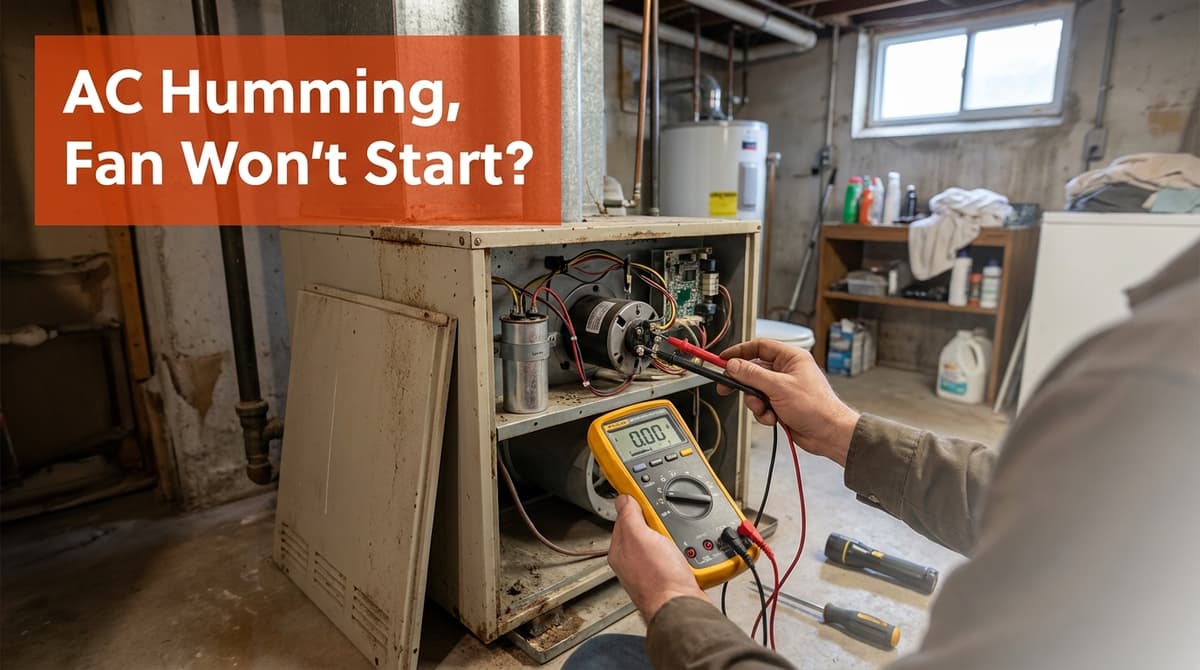
When Your AC Just Hums but the Fan Won’t Start
We recently got a call from a homeowner — we’ll call her Sara — who sounded a little worried. She told us, “The outside unit is humming, but the fan isn’t turning on at all. The house is getting warmer by the minute.”
That description is something we hear a lot in the summer. The system has power and makes a low buzzing or humming sound, but the fan blades on the outdoor unit just sit there. In this post, we’ll walk you through what might be going on, a few safe checks you can do yourself, and when it’s time to have us (or another licensed pro) come out.
Why an AC Unit Hums but the Fan Won’t Turn On
When your outdoor AC unit is humming but the fan doesn’t spin, the system is usually trying to start but something is preventing the fan motor from running. A few common culprits are:
-
Failed or weak capacitor
The capacitor is like a little battery that gives the fan motor a boost to start. When it goes bad, the motor just hums and never gets going. This is one of the most common causes we see.
-
Stuck or seized fan motor
Over time, fan motors can wear out or the bearings can seize. You may hear humming because power is getting to the motor, but the shaft can’t turn.
-
Contactor or relay issues
The contactor is an electrical switch that tells the outdoor unit to turn on. If it’s burned or pitted, it might buzz or hum but fail to send proper power to the fan.
-
Loose or damaged wiring
Age, vibration, or even pests can damage wiring. Sometimes the compressor will try to run (causing a hum) while the fan never gets power.
-
Obstructions in the fan assembly
Debris that falls into the top of the unit can jam the fan blades so the motor hums but can’t spin.
The tricky part is that these issues often sound the same from the outside, which is why a proper diagnosis usually requires tools and training.
Safe DIY Checks Before You Call a Pro
There are a few basic things we encourage homeowners to check before scheduling a service call. These don’t involve opening panels or touching wiring.
1. Confirm Power and Thermostat Settings
-
Check the thermostat mode and temperature
Make sure your thermostat is set to Cool and the temperature is at least 3–5 degrees below the current indoor temperature.
-
Inspect breakers and the outdoor disconnect
Look at your electrical panel and confirm the AC breaker hasn’t tripped. Also check the outdoor disconnect box near the unit to ensure the pull-out or switch is fully inserted and in the ON position.
2. Look and Listen Outside (Without Opening Anything)
-
Watch the fan blades
Stand a safe distance away and look down through the top grill. Are the blades completely still while you hear a hum? That usually points to a start-up issue like a capacitor or motor problem.
-
Check for visible debris
If you can clearly see leaves, sticks, or a foreign object blocking the fan blades from above, you can gently remove what’s on top of the unit, but do not reach inside while the power is on.
3. What You Should Not Try on Your Own
-
Do not push-start the fan with a stick
We know there are online tips suggesting you poke the fan blades to “help it start.” That’s dangerous, and if the capacitor or motor is failing, you can make things worse or get hurt.
-
Do not open electrical panels
Capacitors and contactors store and carry high voltage. Even with the power off, they can be hazardous if you’re not trained to discharge and test them.
If the unit keeps humming with no fan movement after these basic checks, go ahead and turn it off at the thermostat and at the outdoor disconnect to prevent damage while you arrange service.
Why You Shouldn’t Let a Humming Unit Run
When we arrived at Sara’s home, we found that the fan wasn’t running, but the compressor was still trying to. That situation can overheat and damage the compressor — one of the most expensive parts of your system.
Running an AC like this can lead to:
- High internal pressures and temperatures inside the compressor
- Tripped breakers from repeated hard starts
- Premature failure that may mean replacing the entire outdoor unit
Shutting the system down when you notice the hum-but-no-fan issue can literally save you thousands in repairs.
What to Expect During a Professional Service Visit
Homeowners often ask us what we actually do when we come out for this kind of problem. Here’s how we typically handle a “humming but no fan” call:
-
Initial safety and visual check
We verify power is off at the disconnect, inspect wiring, look for burn marks, and check for any obvious mechanical obstructions.
-
Testing the capacitor and contactor
Using a meter, we measure the capacitor’s microfarad (µF) rating against the manufacturer’s specs and check the contactor for proper operation and voltage.
-
Evaluating the fan motor
We test motor windings, check for shorts, and manually spin the fan to see if the bearings are seized or rough.
-
Explaining your options
Once we know what’s wrong, we go over the findings, costs, and whether repair or replacement makes more sense based on the age and condition of the system.
For Sara, the solution was a failed capacitor and a worn fan motor. We replaced both, verified safe operation, and checked the system pressures to be sure the compressor hadn’t been damaged.
Simple Maintenance to Help Prevent Fan Problems
While not every issue is preventable, regular maintenance goes a long way toward keeping your fan motor and electrical components healthy. During a routine tune-up, we typically:
- Clean the outdoor coil so the fan and compressor don’t work harder than they need to
- Check and tighten electrical connections that can loosen over time from vibration
- Inspect capacitors and contactors for early signs of failure
- Lubricate applicable motor bearings (on older units that are not sealed)
- Clear leaves, grass clippings, and debris from around the unit for proper airflow
For your part as a homeowner, you can help by changing air filters regularly, keeping shrubs and grass trimmed back at least 2–3 feet from the outdoor unit, and scheduling professional maintenance once a year.
When It’s Time to Call a Professional
If your AC unit is humming but the fan won’t turn on, and you’ve already checked the basics — thermostat setting, breakers, and obvious debris — it’s time for a licensed technician to step in. Electrical and motor problems aren’t a safe DIY project, and the longer the system tries (and fails) to start, the higher the risk of a costly breakdown.
We’re always happy to talk you through what you’re seeing and let you know whether it sounds like an urgent issue. If you’re ever unsure, turn the system off and reach out — we’ll take it from there and get your home comfortable again.