AC Running But Not Blowing Cold Air? Do This First
AC running but not blowing cold air? Learn the most common causes, simple checks you can do safely, and when it’s time to turn it off and call a technician.
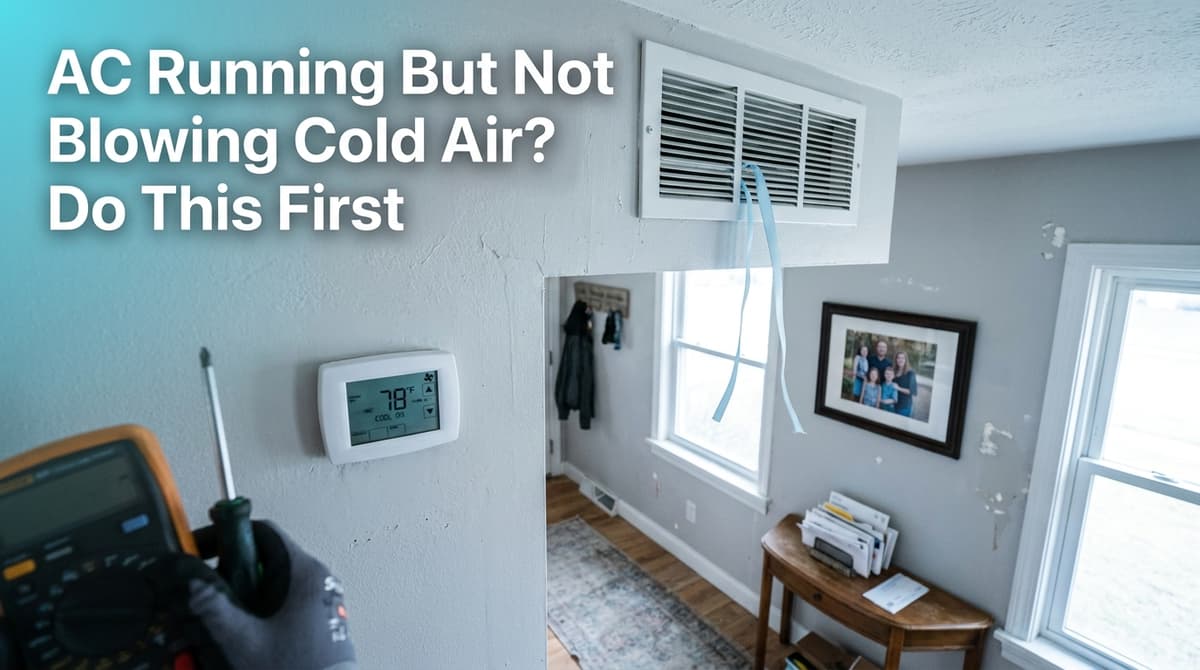
AC Running But Not Blowing Cold Air: What We Told “Mark”
We recently got a call from a new customer — let’s call him Mark. His outdoor AC unit was clearly running, the fan was spinning, and the system sounded normal… but inside the house it was just pushing out warm air. On a day when you really need that cool air, that’s the last thing you want to deal with.
As we were getting Mark on the schedule, we walked him through a few simple steps to try before our technician arrived. Those same steps can help you, too, if your AC is running but not blowing cold air.
First Things First: Don’t Ignore Warm Air
If your system is running but not cooling, something isn’t right. In Mark’s case, we suspected the system might be starting to freeze up, so we recommended he turn the AC to “Off” but set the fan to “On” at the thermostat. That helps thaw any ice that may have formed on the indoor coil so we can actually work on it when we arrive.
Running a struggling AC for hours while it’s not cooling can make a minor issue worse. So as soon as you notice: “The air is running, but it’s not cold,” take a minute to check a few basics.
Step 1: Check Your Thermostat Settings
It sounds simple, but we see this more often than you’d think. Before you assume the worst, look at your thermostat:
- Mode: Make sure it’s set to “Cool”, not “Heat” or “Fan.”
- Set temperature: The setpoint should be at least 3–5 degrees below the current room temperature.
- Fan setting: “Auto” means the fan runs only when cooling; “On” means the fan runs constantly, even if the system isn’t cooling.
If the fan is set to “On” and the AC isn’t actually cooling, you’ll feel warm air circulating — it’s just room-temperature air being moved around. Try switching the fan to “Auto” and see if the air eventually turns cold.
Step 2: Look at the Outdoor Unit
When Mark called, he told us his outdoor unit was running, which helps narrow things down. Here’s what you can safely check outside:
- Is the fan spinning? If the outdoor fan isn’t turning but you hear a hum, the compressor could be trying to run but the fan motor or capacitor may have failed.
- Is there heavy dirt or debris? Leaves, grass clippings, or lint packed around the coil can keep heat from escaping, making your system struggle to cool.
- Do you see ice? Ice on the refrigerant lines or inside the unit is a sign of a possible airflow or refrigerant issue.
What you can do: Gently clear away leaves and debris from around the unit and keep at least 2–3 feet of open space around it. Don’t remove panels or try to chip away ice — that’s where we step in.
Step 3: Check Your Air Filter and Airflow
One of the most common reasons for an AC that’s running but not cooling is a clogged air filter. Restricted airflow can cause your indoor coil to freeze, which is exactly why we told Mark to turn the system off and leave the fan running to thaw it out.
Here’s what to check:
- Locate your return air filter (often behind a grille in the hallway ceiling, wall, or at the unit).
- Slide it out and look for heavy dust buildup or a gray, matted appearance.
- If it’s dirty, replace it with a new filter of the same size and type.
While you’re at it, make sure supply vents and return grilles throughout the house are open and not blocked by furniture, rugs, or curtains. Closing too many vents can choke the system, leading to poor cooling and potential freeze-ups.
Step 4: Check the Breakers and Power
Another simple but important check is your electrical panel. Central AC systems have power going to both the indoor air handler and the outdoor unit.
- Find your electrical panel and look for breakers labeled “AC,” “Air Handler,” or “Furnace.”
- If a breaker is in the middle or “tripped” position, switch it fully off, then back on.
- Some outdoor units also have a disconnect box nearby; make sure it hasn’t been pulled out or switched off.
If a breaker keeps tripping, don’t force it. That’s a sign of an electrical problem that needs a technician’s attention.
Step 5: When to Turn the System Off and Call Us
There are a few red flags that tell you it’s time to stop troubleshooting and schedule a service call:
- Ice on the refrigerant lines (outside or near the indoor unit).
- Burning smells or strong electrical odors.
- Loud grinding, screeching, or banging noises.
- The system runs continuously but the home never cools down.
In situations like Mark’s, we often recommend:
- Set the thermostat to “Off”.
- Set the fan to “On” to help thaw any ice.
- Give it a couple of hours to defrost while you wait for the technician.
This simple step can save time on the service call because we can’t properly diagnose a frozen system until it’s fully thawed.
Common Professional Fixes for an AC Not Blowing Cold
Once we arrive, here are some of the issues we most often find with systems that are running but not cooling:
- Low refrigerant charge due to a leak.
- Failed capacitor (a common cause of a humming outdoor unit with no cooling).
- Dirty evaporator or condenser coils that need professional cleaning.
- Bad contactor or electrical components preventing the compressor from running properly.
- Blower motor problems reducing indoor airflow.
These are issues that require proper tools, gauges, and training — not something we recommend tackling on your own.
Keep Your AC Cooling Reliably
For Mark, we were able to get a technician out the same day. After a thorough diagnosis and repair, his system was back to blowing cold air instead of warm. The best part is that many breakdowns like his can be prevented with regular maintenance and simple checks like changing filters and keeping the outdoor unit clear.
If your AC is running but not blowing cold air, walk through the steps above and then give us a call. We’ll diagnose what’s really going on, explain your options clearly, and get your home comfortable again as quickly as possible.