AC Running But Not Cooling & Fan Not Spinning
AC running but not cooling and the outdoor fan not spinning? Learn common causes, what you can safely check yourself, and when to shut it off and call a pro.
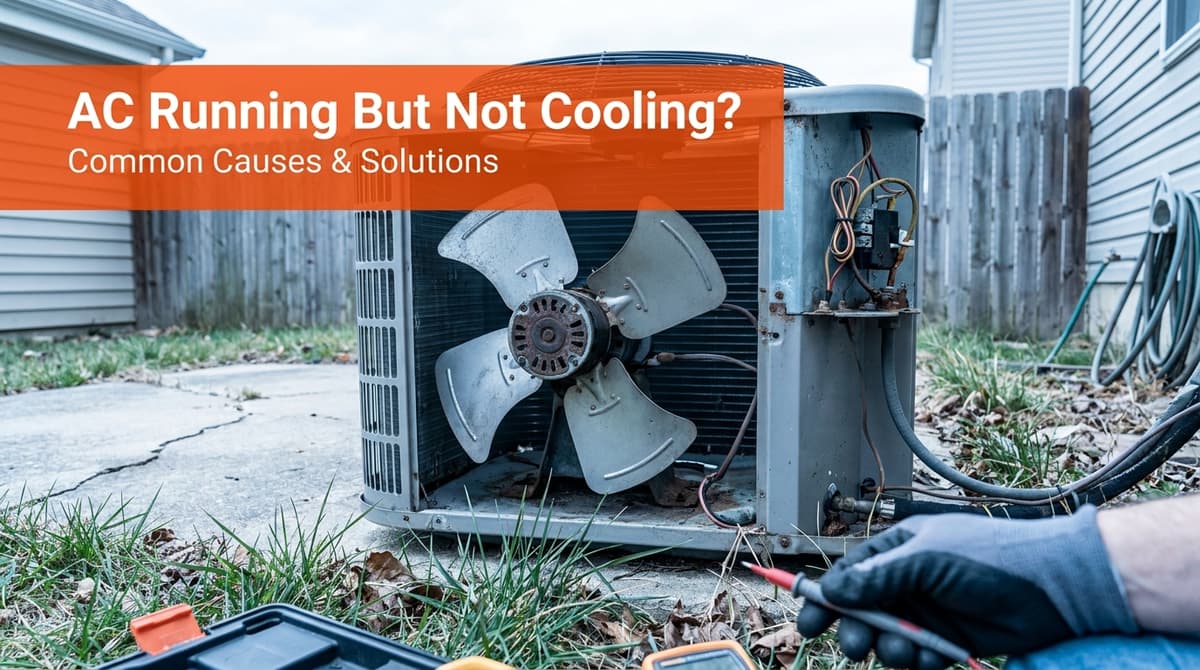
AC Running But Not Cooling & Fan Not Spinning: What We Tell Our Customers
We recently got a call from a customer — let's call her Lisa — on one of those muggy afternoons where the house just won’t cool down. Her thermostat said 88–89°F inside, the AC was “running,” but it wasn’t getting any cooler. When she went outside to check the unit, she noticed something important: the outdoor fan was trying to turn, but it never really got going.
If you’ve ever walked outside, heard your AC humming, but seen the fan sitting still (or just twitching), you’re dealing with a very similar situation to what Lisa described. It’s a common problem, and there are a few things you can safely check yourself — and a point where you really do want to shut it off and call in a pro.
What It Means When the Indoor Unit Runs, But the Outdoor Fan Doesn’t
In Lisa’s case, the system had cooled “okay” earlier in the day, but it ran for hours and never reached the set temperature. Then things got worse: the temperature inside actually started climbing while the AC continued to run. When she checked outside, the fan blade on the outdoor unit just kind of jerked and stopped.
When the indoor part of your AC (the blower and thermostat) acts like everything is fine, but the outdoor fan is not spinning, it usually points to one of a few issues:
- Bad capacitor – This is the most common cause. The capacitor is like a battery that gives the fan motor (and sometimes the compressor) a boost to start. When it fails, you might hear humming and see the fan trying but failing to spin.
- Failed or failing fan motor – The motor itself can wear out over time. You might see it “try” to turn, move a little, and then stop.
- Burned or loose wiring – Electrical connections can overheat or loosen, cutting power to the fan.
- Seized bearings or physical obstruction – Debris or a mechanical failure can lock up the fan.
All of these are issues that require tools, parts, and electrical knowledge to fix safely. But that doesn’t mean you’re helpless. There are a few things you can look at without putting yourself at risk.
What Homeowners Can Safely Check Before We Arrive
When Lisa called, we walked through the basics with her. Here’s what we generally recommend any homeowner check while you’re waiting for a technician — no tools required:
1. Double-check your thermostat settings
- Make sure the thermostat is set to “Cool”, not “Heat” or “Off.”
- Set the fan to “Auto” (we’ll talk about “On” in a moment).
- Set the temperature at least 3–5 degrees below the current room temperature.
Sometimes a delayed response (like Lisa noticed — a few minutes between changing the thermostat and the outside unit kicking on) is normal, but if it’s not cooling at all after running a while, something’s wrong.
2. Look at the outdoor unit (but don’t open it)
You can safely walk outside and observe what’s happening:
- Is the outdoor unit humming but the fan blade isn’t spinning?
- Does the fan try to move a little, then stop?
- Do you hear any loud buzzing, grinding, or clicking?
These details help us narrow down whether it’s likely a capacitor, a motor, or something more serious. Do not remove panels, poke around inside, or attempt to “jump start” the fan with a stick or screwdriver — it’s dangerous and can damage the system.
3. Check your indoor filter
A clogged air filter won’t usually stop the outdoor fan from spinning, but it can cause the system to freeze up and run constantly without cooling well. Take a quick look at your filter:
- If it’s gray, furry, or you can’t see light through it, change it.
- Make sure it’s installed in the correct direction (arrow pointing toward the furnace/air handler).
When You Should Turn the AC Off Immediately
One of the most important things we told Lisa — and that we tell a lot of callers in this situation — is this: if your AC is running but blowing warm air and the outdoor fan isn’t working properly, turn the system off.
Here’s why it matters:
- If the fan isn’t spinning, your compressor can overheat and fail. That’s a much more expensive repair than a capacitor or fan motor.
- Continuous running without cooling can cause ice buildup on the indoor coil, which means more downtime and potential water leaks when it thaws.
- You’re paying for electricity while the house is actually getting warmer, not cooler.
So if you notice the house temperature rising — like Lisa saw when it climbed up to 88–89°F — and warm air is blowing from the vents, flip the system to Off at the thermostat. It’s the safest move for your equipment and your wallet.
Using Your Fan Setting to Stay Comfortable While You Wait
One question Lisa asked that we hear often: “If I run just the fan on the air conditioner, does that actually cool things down?”
Here’s how to use that setting wisely:
- On your thermostat, you can usually set the fan to “On” instead of “Auto.”
- In “On” mode, the indoor blower fan will run continuously, even if the cooling part of the system is off.
- This doesn’t make new cold air, but it can help circulate the air, move cooler air from downstairs to upstairs, and make you feel a bit more comfortable.
We often recommend this when a system is frozen up: turn the cooling off, set the fan to On, and let it run to help thaw the ice and move air. Just keep in mind:
- The fan will run constantly in “On” mode, so it will use some electricity.
- If your home is very humid, running the fan continuously can sometimes make it feel a bit more muggy.
When It’s Time to Call a Professional
With Lisa, once we confirmed the fan wasn’t spinning and the house was heating up, we scheduled a technician for the next morning and advised her to keep the system off except for using the indoor fan if needed. That’s usually the right call when you notice:
- Outdoor fan not spinning or only twitching
- AC running for hours without reaching the set temperature
- Warm or barely cool air coming from the vents
- Unusual humming, buzzing, or burning smells
A technician can safely test the capacitor, check voltages, inspect the fan motor, and make sure the compressor hasn’t been damaged. In many cases, replacing a bad capacitor or fan motor gets you back up and running the same day.
If your AC is running but not cooling and you’ve noticed that outdoor fan isn’t spinning, the best thing you can do is shut it down, stay safe, and let us take it from there. A quick professional visit now can save you from a major breakdown later.