Why Your AC Runs But Doesn’t Cool—and Spikes Your Bill
AC running but not cooling and your electric bill is sky-high? Learn the most common HVAC efficiency problems and what you can check before calling for service.
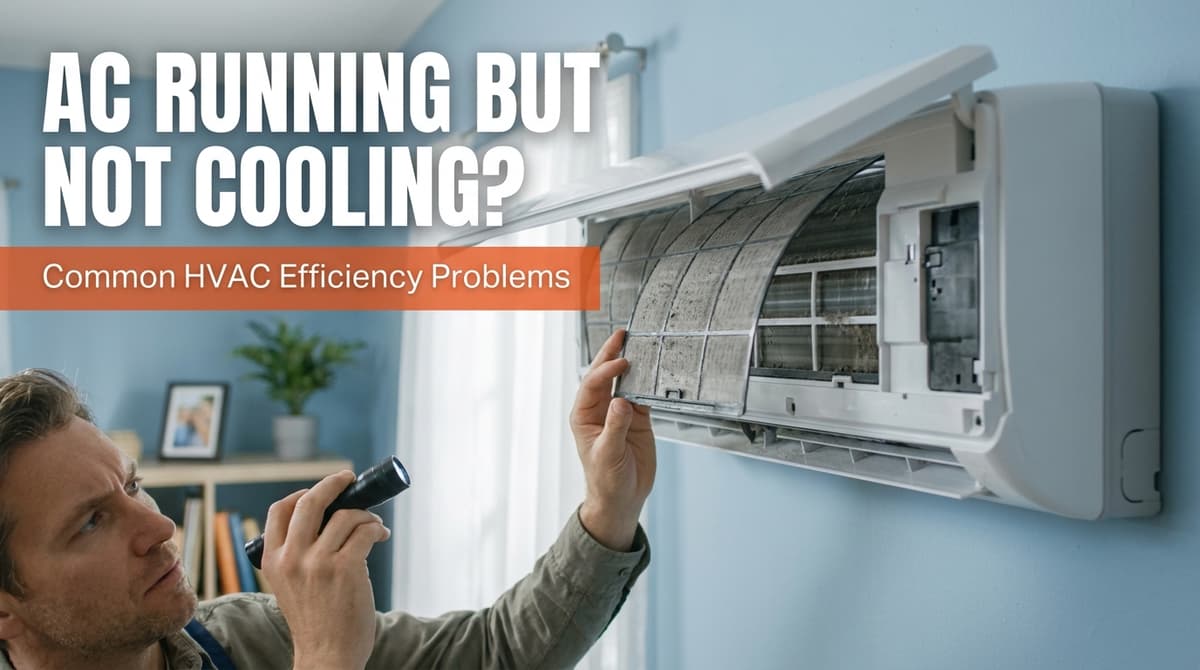
When Your AC Runs All Day But Still Feels Warm
We recently got a call from a homeowner — let’s call her Kelly — who was at her wit’s end. Her air conditioner was definitely running, she could hear it kick on, feel air coming out of the vents… but the house just wasn’t getting very cool.
On top of that, she’d just opened her electric bill: $391 for about 1,900 square feet. That’s a painful number for a home that size, even with today’s rates. To make matters worse, she noticed condensation leaking out of a little storage area and all the way across her garage.
Kelly’s question to us was simple: “Why is my AC working so hard, not cooling well, and making my electric bill so high?” If you’re wondering the same thing, you’re not alone — we hear some version of this situation every week in the summer.
First Step: A Real Diagnostic, Not Just Adding Refrigerant
On Kelly’s call, just like in all our service calls, we explained that our service visit fee covers a full system diagnostic. A lot of people assume they just need “a little refrigerant,” but that’s usually not the full story.
Here’s what we typically check when we arrive:
- Thermostat settings and operation – to make sure the system is actually being told to do the right thing.
- Airflow inside the home – filters, vents, and ductwork conditions.
- Indoor unit (often in a closet, attic, basement, or garage) – including the evaporator coil and condensate drain.
- Outdoor unit – the condenser coil, fan, and refrigerant pressures.
Like Kelly, many homeowners have a split system: one part of the system inside (usually housing both the furnace and the indoor AC coil) and another unit outside. When you tell us it’s a cooling problem, we focus on the AC side, but we still look at the overall health of the system so we’re not missing anything obvious.
Why Your AC Runs Constantly But Doesn’t Cool Well
There are a handful of issues we see over and over that cause “running but not cooling” complaints and high electric bills:
1. Restricted Airflow (Dirty Filter or Coil)
We always start with the basics. A clogged air filter or a dirty indoor coil makes your system work much harder to push air. That means:
- Less cool air actually reaches your rooms
- The system runs longer to try to hit the set temperature
- Your energy use — and bill — goes up
Homeowner tip: Check your filter every 30 days in peak cooling season. If it looks gray, fuzzy, or clogged, replace it. This one simple habit can prevent a lot of what Kelly was dealing with.
2. Low Refrigerant or Refrigerant Leaks
Kelly asked us about refrigerant costs on the phone, because she’d heard that “maybe it just needs Freon.” While low refrigerant can cause poor cooling, it’s important to understand:
- AC systems are sealed; they don’t “use up” refrigerant like a car uses gas.
- If it’s low, there’s usually a leak that needs to be found and addressed.
- Simply topping it off every year is like adding air to a leaking tire without fixing the puncture.
Low refrigerant causes the system to run and run, but with less cooling power. That translates straight into a higher electric bill and, if ignored, can damage the compressor.
3. Dirty or Blocked Outdoor Unit
The outdoor unit needs to dump heat from inside your home out into the air. When the condenser coil is covered in dirt, grass clippings, or leaves, it can’t release heat efficiently. The system runs longer, your home feels lukewarm, and the power company sends you a bigger bill.
Homeowner tip: Keep at least 2 feet of clear space around your outdoor unit. Gently rinse the coil with a garden hose (from the side, not from the top) once or twice a season, with the unit powered off.
What That Condensation Leak Is Telling You
The detail that really caught our attention with Kelly’s call was the condensation running across her garage floor from the storage area. That’s a big clue.
When your AC runs, it pulls humidity out of the air. That moisture is supposed to drain safely through a condensate line to the outside or to a drain. If that line is clogged, cracked, or not pitched correctly, you can see:
- Water in the garage or around the indoor unit
- Musty smells or mold growth
- In some systems, the AC shutting off due to a safety switch
In Kelly’s case, the condensation leak was a sign the system was working hard in humid conditions but not draining properly. That kind of issue doesn’t just risk water damage; it also often goes hand-in-hand with efficiency problems like dirty coils or poor airflow.
How Poor Efficiency Shows Up on Your Electric Bill
Kelly had owned her home for about two years and had never had the system serviced. That’s extremely common — many people assume if it turns on, it’s fine.
But here’s what happens inside an unmaintained system:
- Coils slowly clog with dust and debris
- Motors and fans lose performance
- Refrigerant leaks go unnoticed until cooling drops way off
- Thermostats drift out of calibration
The result? The AC runs longer and more often to do the same job it used to do easily. You may not notice the change day-to-day, but your utility bill absolutely will. That’s exactly what triggered Kelly to finally call: someone told her, “Your bill should be higher in summer, but not that high.”
What We Do on an Efficiency-Focused Service Call
During a visit like Kelly’s, our technician doesn’t just fix the most obvious problem and leave. We look at the whole system for efficiency so you’re not calling us again in three weeks with the same complaint.
A typical visit for a “running but not cooling and high bill” concern includes:
- Checking temperature difference between return and supply air
- Inspecting and replacing filters as needed
- Cleaning or recommending cleaning of dirty coils
- Measuring refrigerant pressures and looking for signs of leaks
- Inspecting the condensate drain and clearing blockages
- Verifying thermostat operation and settings
From there, we walk homeowner through clear repair or maintenance options and what each one will do for comfort and efficiency. Sometimes it’s a simple fix; sometimes it’s the first sign that an older system is on its last legs.
Simple Things You Can Check Before You Call
While a professional diagnostic is the only way to know for sure what’s going on, there are a few quick checks you can safely do yourself if your AC is running but not cooling well:
- Change or clean the air filter if it’s dirty.
- Make sure supply and return vents are open and not blocked by furniture or rugs.
- Set the thermostat to “cool” and “auto,” not “on,” and confirm the temperature is actually lower than the room temperature.
- Look at the outdoor unit to see if the fan is running and the coil is clear of debris.
- Check around the indoor unit for signs of water or condensation where it shouldn’t be.
If you’ve tried these basic steps and your home is still warm while your system runs constantly — and especially if your bill has spiked like Kelly’s — it’s time to bring in a technician.
Don’t Ignore the Signs Your AC Is Wasting Energy
Kelly did exactly the right thing: when her comfort dropped and her bill jumped, she scheduled a visit so we could see what was really going on. Whether your system is two years old or twenty, strange condensation, long run times, and unusually high electric bills are all signs something’s not right.
If your AC is running but not cooling well, we’re happy to come out, do a thorough diagnostic, and help you decide the best path forward — whether that’s a simple repair, some targeted maintenance, or a bigger upgrade plan. Your home should be comfortable, and your electric bill shouldn’t be a surprise every month.