Why Your AC Struggles in Extreme Heat (and When to Call Us)
Is your AC running nonstop but your home still feels warm? Learn what’s normal in extreme heat, common causes of poor cooling, and when to call for an inspection.
When Your AC Just Can’t Keep Up
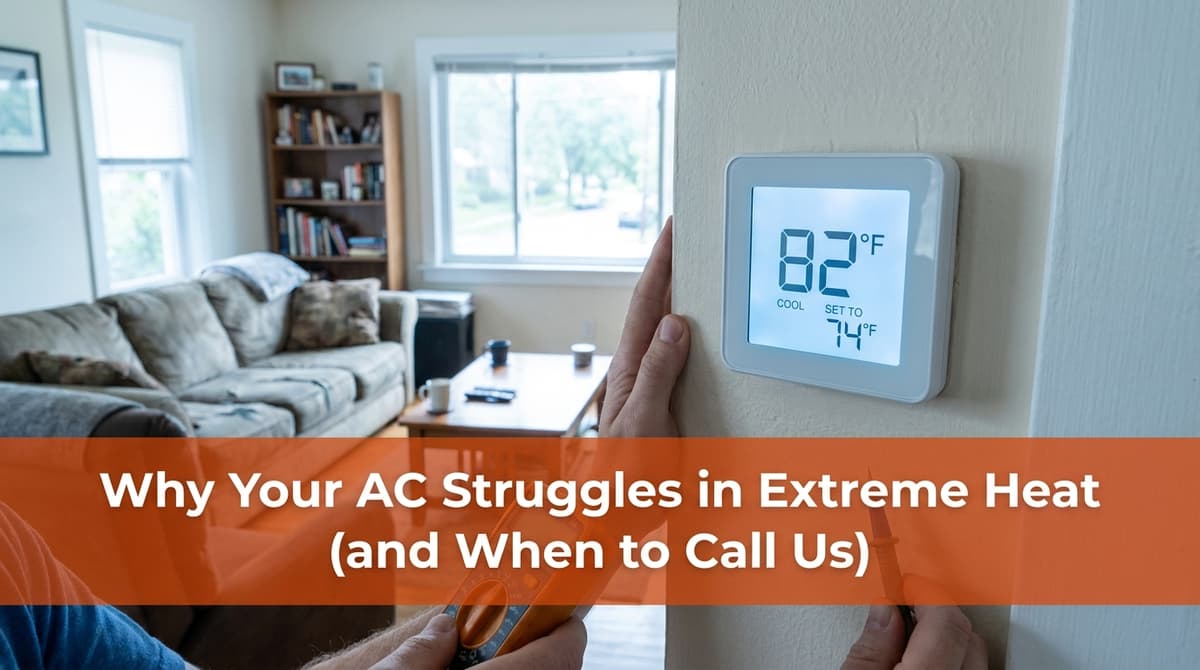
We recently got a call from a customer — let’s call her Lisa — who owns a rental home. Her tenants had been complaining for about a week that the AC just wasn’t keeping up during the day. With the heat wave we’ve been having, the system was running constantly, but the house stayed a few degrees warmer than the thermostat setting.
Lisa’s big question was one we hear a lot in extreme heat: “Is this just because it’s so hot outside, or is something actually wrong with the system?” That call turned into a great conversation about what’s normal for an AC in severe heat, what’s a warning sign, and when it’s time to schedule an inspection.
What Your AC Can (and Can’t) Do in Extreme Heat
Central air conditioners are designed to keep your home comfortable under typical summer conditions — but they do have limits. Most systems are sized assuming about a 20°F difference between indoor and outdoor temperatures.
So if it’s 95°F outside, a properly sized and healthy system will usually keep the home around 75°F. But when the temperature spikes to 100°F+ for hours at a time, your AC is working at its absolute max just to hold that 20-degree difference.
In very high heat, it can be considered normal if:
- The system runs almost continuously during the hottest part of the day
- The indoor temperature creeps up 2–4°F above the thermostat setting in mid-afternoon
- The house feels cooler and more comfortable at night once outdoor temps drop
In other words, even a good system may not hit your exact setpoint during a heat wave — but it should still feel reasonably comfortable and recover in the evenings.
When “Working Hard” Becomes “Something’s Wrong”
As we talked through Lisa’s situation, we asked a few key questions we always use to separate “normal struggle” from “time to inspect.” Here are the main red flags we listen for:
- Big temperature gap. If the thermostat is set to 72°F and the house can’t get below 80°F, even at night, something’s likely off.
- Weak airflow. Vents barely blowing, certain rooms much warmer than others, or a “stuffy” feeling can all point to airflow problems.
- Warm air from the vents. If the air coming out isn’t noticeably cooler than the room air, the system may not be cooling properly.
- Short cycling. The system turns on and off every few minutes instead of running steady cycles.
- Unusual noises or ice. Hissing, grinding, or ice forming on the refrigerant lines or outdoor unit are all warning signs.
If you’re seeing any of these along with poor cooling, it’s more than just a heat-wave limitation — it’s time to have a technician take a look.
Common Reasons Your AC Struggles in High Heat
When we send a technician out for a situation like Lisa’s, we’re usually looking at a few common culprits. Most of them start small and get worse when the heat turns brutal.
1. Dirty Filter or Restricted Airflow
The number one issue we see is a clogged air filter. When the filter is dirty, your system can’t move enough air, which means it can’t remove enough heat from your home.
What you can do:
- Check your filter monthly during the cooling season
- Replace it at least every 1–3 months (more often with pets or allergies)
- Make sure all supply and return vents are open and not blocked by furniture, rugs, or curtains
2. Dirty Outdoor Unit (Condenser)
Your outdoor unit’s job is to get rid of the heat pulled from your home. When it’s covered in dirt, leaves, or cottonwood fluff, it can’t “breathe,” and cooling performance drops — especially noticeable on hot days.
What you can do:
- Keep at least 2 feet of clearance around the outdoor unit
- Gently hose off grass clippings and loose debris from the fins (power washers can damage them, so avoid high pressure)
- Have a professional perform a deeper cleaning during annual maintenance
3. Low Refrigerant or Leaks
If the system is low on refrigerant, it can’t absorb and move heat effectively. You may notice long run times, lukewarm air, or ice buildup on the lines or coil.
This is not a DIY fix — refrigerant issues must be handled by a licensed technician. We don’t just “top it off”; we look for leaks, repair them if possible, and then recharge to the correct level.
4. Aging or Undersized Equipment
Sometimes, the system is simply too old or too small for the home’s current needs. Maybe additions were built, insulation changed, or windows were replaced. Or the unit was never sized quite right to begin with.
In those cases, we talk with homeowners about realistic expectations, possible efficiency upgrades, and ways to help the existing system out — like sealing ducts, adding insulation, or improving shading.
Simple Steps to Help Your AC During a Heat Wave
While we were scheduling Lisa’s inspection, we walked her through a few easy steps to help her tenants stay more comfortable while they waited:
- Set a realistic temperature. Aim for 74–78°F rather than the mid‑60s during a heat wave. Setting it lower won’t make it cool faster; it just makes the system run longer.
- Run ceiling fans. Fans don’t lower the air temperature, but they help you feel 3–4°F cooler. Just remember to turn them off when you leave the room.
- Close blinds and curtains. Blocking direct sun, especially on west- and south-facing windows, takes a lot of heat load off the system.
- Limit heat-producing activities. Try not to bake, use the oven, or run the dryer during the hottest part of the day.
- Keep doors and windows closed. Even “just for a minute” adds a big rush of hot air the system has to remove.
When to Call for an AC Inspection
If your home is just a couple degrees warmer than the thermostat in the late afternoon, but feels fine at night, your AC may simply be hitting its design limits in extreme heat. But if you notice any of the following, it’s time to schedule an inspection:
- Indoor temps more than 4–5°F above your setpoint for hours
- AC running nonstop with little or no improvement
- Uneven temperatures from room to room
- Strange noises, odd smells, or visible ice on the equipment
- Your energy bill suddenly spikes without a clear reason
When Lisa called, her tenants had already noticed struggling performance for about a week, so scheduling a professional visit was absolutely the right move. A thorough inspection can catch small issues before they turn into full system failures — especially when your AC is under the most stress.
If your system is having a hard time keeping up in this heat and you’re not sure whether it’s normal or a problem, we’re happy to take a look, answer your questions, and help you get your home comfortable again.