Why Your Bathtub Takes Forever to Fill
Tub taking forever to fill? Learn common tub valve and flow issues, simple checks you can do, and when it’s time to call a professional plumber.
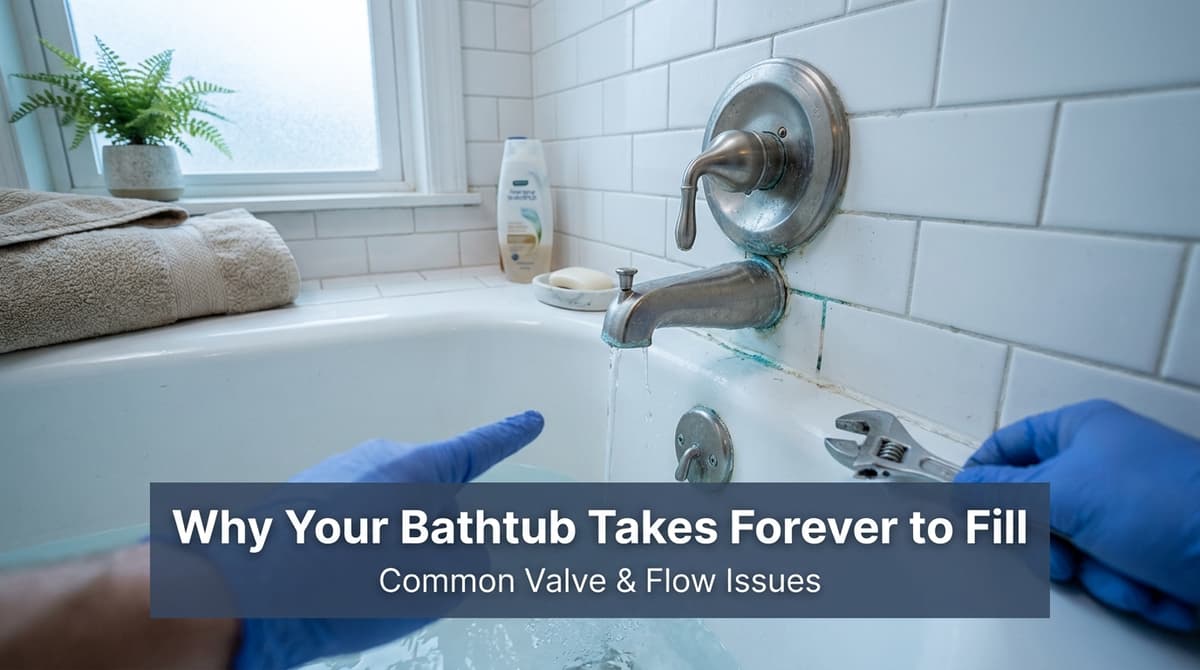
Why That Bathtub Takes Forever to Fill
We recently got a call from a customer — let’s call her Emily — who reminded me of a question we hear all the time: “Why does my bathtub take so long to fill?”
In Emily’s case, we had already been out to fix an issue with her upstairs shower. Before she turned anything back on, she called our office to double-check that everything was fixed and to ask about another concern: the bathtub valve upstairs just wasn’t filling the tub properly. She’d been told previously that the owner was going to come out and look at it, and she wasn’t sure whether that had ever really happened.
On our end, we confirmed that the tech had tested both the shower and the tub flow at the valve. He verified that the valve had been pulled, inspected, and put back together properly, and that the flow at that time looked good. Emily’s question, though, is exactly what many homeowners wonder: if everything “looks good,” why does a tub sometimes still seem to take forever?
Bathtub vs. Shower: Why Slow Filling Is So Noticeable
First thing to understand is that tubs and showers feel different, even when they’re on the same valve. A typical bathtub is large — you’re usually waiting on 40–50 gallons of water to feel like you’ve got a decent bath. So even a small drop in water flow shows up as a big increase in fill time.
By contrast, a shower feels “fine” as long as you’ve got enough pressure coming through the showerhead. Many low-flow showerheads are designed to give a strong spray even at lower gallons per minute (GPM), so a hidden flow problem might not be obvious until you open the tub spout and realize it’s only trickling compared to what you expect.
What “Normal” Tub Flow Looks Like
As a rough guideline, most tub spouts should deliver somewhere in the range of 4–7 GPM, depending on your home’s plumbing and water pressure. If it’s taking 15–20 minutes or more to get a decent bath drawn, something is likely restricting that flow.
Common Tub Valve and Flow Issues
When we get calls like Emily’s, here are the main culprits we look for at the bathtub valve and surrounding plumbing.
1. Partially Closed or Failing Valve
Behind the tub trim plate is your mixing valve, which blends hot and cold water. If that valve isn’t opening all the way, or if the cartridge inside is worn or clogged, you’ll get reduced flow.
Signs this might be the issue:
- Both hot and cold seem weak at the tub spout
- Flow changes when you jiggle or adjust the handle, even slightly
- You’ve recently had valve work done and flow got worse afterward
In Emily’s situation, our tech specifically pulled and inspected the valve to make sure it was opening correctly and not blocked. That’s exactly what we do when a homeowner mentions slow tub filling during a service call.
2. Debris or Mineral Buildup in the Cartridge
Hard water is a quiet troublemaker. Over time, minerals and small debris can collect inside the valve cartridge and restrict the internal passages.
Some symptoms:
- Flow has gotten worse gradually over months or years
- Other fixtures in the same bathroom are “okay” but the tub is weak
- You see white or greenish buildup on faucets and showerheads
Cleaning or replacing the cartridge is usually the cure — that’s something we often do while we have the valve open, instead of waiting for it to fail completely.
3. Diverter Issues (Tub/Shower Changeover)
On many setups, the tub spout or the valve handle has a diverter that sends water up to the showerhead. When that diverter is worn, stuck halfway, or broken, some water can be “lost” trying to go up toward the shower instead of out of the tub spout.
Things you might notice:
- When it’s on “tub,” you still see drips or a small stream from the showerhead
- Flow at the tub spout seems weak even with hot and cold fully open
- You have to fight with the diverter to switch between tub and shower
In those cases, we’ll test in both directions: full flow to the tub, then full flow to the shower, and check each component for internal leaks or restrictions.
House-Wide Problems that Show Up at the Tub
Not every slow-filling tub has a valve problem. Sometimes the valve checks out just like Emily’s did, but the tub is revealing an issue somewhere else in the system.
4. Main Water Pressure Too Low
If your house water pressure is low, big fixtures like tubs and outdoor spigots are where you’ll really feel it. Common causes include:
- A failing pressure-reducing valve (PRV) at the main
- Partially closed main shutoff
- City supply pressure that’s consistently on the low side
We typically put a gauge on your system and check static and working pressure. If the numbers aren’t where they should be, adjusting or replacing the PRV can make a big difference at the tub.
5. Old, Corroded, or Undersized Pipes
In older homes, galvanized or corroded piping can slowly close up inside, restricting flow. The tub, because it demands a lot of water, will be one of the first places you really notice it. If this is the case, no amount of valve cleaning will fix the core issue — it may be time to talk about repiping sections of the home.
What You Can Check Before Calling a Pro
There are a few simple things homeowners can safely check before scheduling a service call for a slow-filling tub:
- Compare fixtures: Does the sink in the same bathroom have strong flow? How about another tub or shower in the house?
- Check the showerhead: If the shower is also weak, try unscrewing the showerhead and briefly running water to see if the flow improves without it.
- Watch the showerhead while filling the tub: If water drips or streams from the showerhead while the tub is on, your diverter may be leaking internally.
- Listen for changes: Turn the tub all the way on and then open another fixture. If the tub flow drops a lot, you may be dealing with house-wide pressure or piping issues.
When It’s Time to Call a Professional
There’s a line between simple homeowner checks and digging into the valve — and that’s where we come in. You should call a pro if:
- You suspect the cartridge or mixing valve is clogged or failing
- The diverter doesn’t fully switch between tub and shower
- You’ve got good pressure elsewhere but the tub is still slow
- Flow has suddenly dropped after a recent repair or renovation
On Emily’s call, a quick check between the office and our technician confirmed that the upstairs shower and bathtub valve had been tested thoroughly and were performing properly at that time. That kind of back-and-forth is exactly what we do every day to make sure you’re safe and confident turning your water back on.
If your tub feels like it takes an eternity to fill, don’t just live with it. Whether it’s a simple valve issue, a diverter problem, or a bigger pressure concern, we’re happy to track it down and get your bathtub filling the way it should.