Why Your AC Shuts Off from a Clogged Drain Line
AC keeps shutting off and thermostat going blank? A clogged condensate drain line may be the culprit. Learn why it happens and what homeowners can safely do.
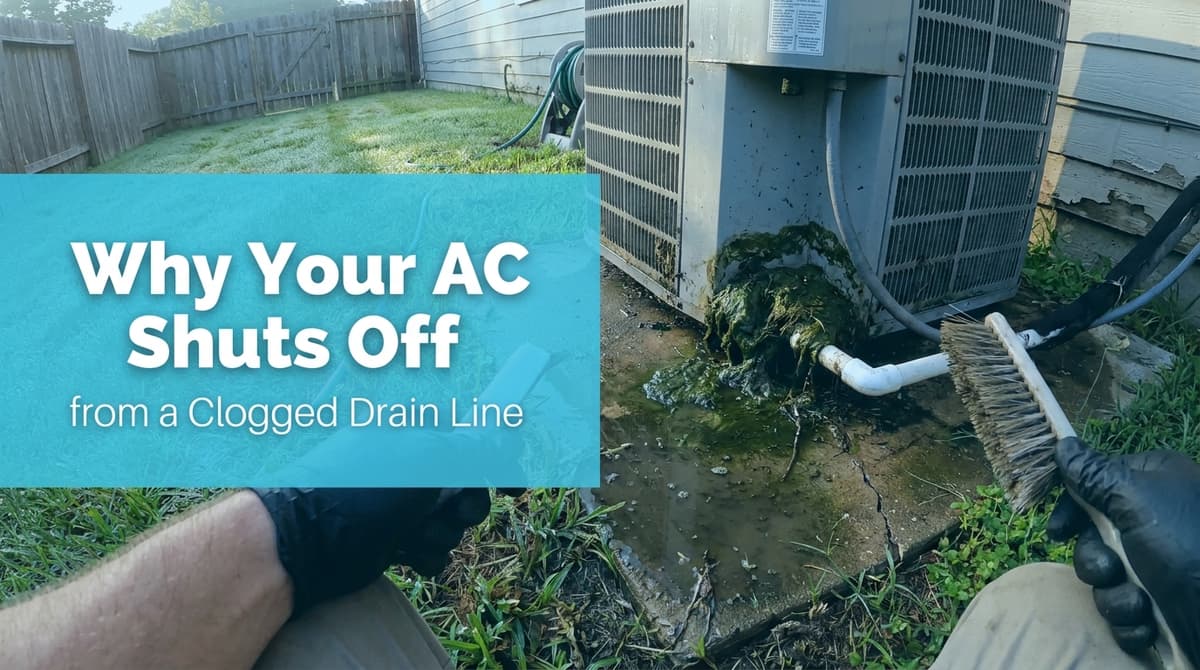
When a Clogged AC Drain Line Keeps Killing the Thermostat
We recently got a call from a homeowner — let’s call him Mark — who was pretty frustrated. We’d been out to his home the week before to clear a clogged AC drain line in his attic. The clog had backed up condensate water, tripped the safety sensor, and completely shut his thermostat down. We cleared it, everything worked… and then a week later, he was calling us again with the exact same problem.
As we listened to Mark describe what was happening, we knew this was a great example of a common issue we see every summer: an air conditioner that keeps shutting off because the drain line is clogged again. Let’s walk you through what’s going on in a case like Mark’s, what we look for on a service call, and what you as a homeowner can do to prevent repeat breakdowns.
Why a Clogged Drain Line Can Shut Your AC (and Thermostat) Down
When we arrive on a job like Mark’s, one of the first places we look is the condensate drain system. Any time your AC runs, it pulls humidity out of the air and that moisture turns into water on the indoor coil. That water has to go somewhere, so it drains into a pan and then out through a small PVC drain line.
Over time, that line can build up algae, slime, dust, and debris. Once it clogs, water backs up into the drain pan. To protect your home from water damage, modern systems usually have a float switch or pan sensor wired into the low-voltage circuit. When water rises too high, that safety switch trips and shuts the system down. In many homes — like Mark’s — that means the thermostat goes completely blank because the safety has cut power to the control circuit.
Why the Problem Came Back So Fast
When a customer tells us, “You just cleaned this last week and it’s already clogged again,” we start thinking about root causes instead of just the symptom. A simple clearing can get water flowing again, but if we don’t address why it clogged, you can be right back where you started.
On repeat calls like Mark’s, here are a few things we typically check:
- Is the drain line pitched correctly? If the pipe sags or runs flat, water moves slowly and sludge grows faster.
- Is there an internal restriction? Sometimes the trap or coil outlet fitting is partially blocked and only got “opened” a little the first time.
- Is the drain pan rusted or dirty? Corrosion and gunk in the pan can constantly feed buildup back into the drain line.
- Is there a secondary drain or pan? We verify that all drains are clear, not just the first one we see.
- Is the float switch working correctly? A stuck or miswired switch can shut things down even when water is draining.
We’ve learned that if we treat Mark’s situation like a quick “unclog and go” visit, there’s a good chance we’ll be talking again in a week. That’s why we slow down and inspect the whole condensate path.
What Homeowners Can Safely Check Before Calling Us
There are a few simple checks we often walk homeowners through on the phone when they describe a blank thermostat and recent drain issues. If you’re comfortable, you can look at these items before we arrive:
- Check the air filter. A badly clogged filter can cause the coil to freeze and then dump extra water when it thaws, overwhelming the drain.
- Look at the emergency pan (if accessible). In many attics, you’ll see a metal pan under the unit. If it’s holding water, that’s a sign of a condensate problem.
- Inspect the outside drain termination. Find where the PVC drain exits the house. If it’s dripping steadily while the AC runs, that’s a good sign. If there’s no drip on a hot day with the AC running, it may be clogged.
- Verify thermostat power. If the thermostat is completely dead, it often means the float switch has cut power, but a tripped breaker or blown low-voltage fuse can also be involved.
We never recommend that homeowners open electrical panels or start cutting/drilling drain lines. When in doubt, shut the system off at the thermostat and let us track it down.
Simple Maintenance Steps to Prevent Drain Line Clogs
One of the best ways we help customers avoid Mark’s situation is with regular drain line maintenance. There are a few homeowner-friendly steps that can make a big difference:
- Flush the drain line (if there’s an access point). Many systems have a cleanout tee on the PVC line. With the system off, you can pour a small amount of white vinegar (we usually suggest 1/4–1/2 cup) into the line a few times a year to discourage algae growth.
- Keep the area around the indoor unit clean. Dust, insulation fibers, and debris in an attic or closet can get drawn into the unit and end up in the drain pan.
- Change filters regularly. We recommend at least every 1–3 months during cooling season. Good airflow means less icing and more stable condensate flow.
- Schedule professional maintenance. During our tune-ups, we always inspect and clear the condensate system, test the float switch, and look for early signs of trouble.
When we put Mark on a regular maintenance schedule and treated the drain line proactively, his “mystery thermostat shutdowns” stopped being a yearly surprise.
When It’s Time to Call in an HVAC Pro
If your situation sounds like Mark’s — thermostat going blank, system recently serviced, drain line supposedly cleaned — that’s our cue to take a deeper look. Here’s when we recommend you call us instead of trying to DIY it:
- The thermostat is completely dead and won’t come back on.
- You see water in the pan or signs of water damage around the unit.
- You’ve cleared the drain before, but the problem keeps returning.
- You’re not comfortable working in an attic or near electrical components.
On a call like Mark’s, we’ll trace the entire condensate route, test the float switch and wiring, and verify there isn’t a secondary issue like a frozen coil or low-voltage short. Our goal is not just to get your AC running today, but to keep that drain line from turning into a repeat headache.
We’re Here to Keep Your AC Running and Your Home Dry
We know how stressful it is when the thermostat suddenly goes dark on a hot day — especially when you thought the problem was already fixed. If your AC is shutting off because of a clogged drain line, or if you suspect that’s what’s going on, we’re here to help.
Give us a call, and we’ll treat your home the same way we treated Mark’s: by finding the real cause of the clog, protecting your home from water damage, and keeping your system running the way it should.