Can One Company Handle Plumbing & Electrical for Tankless?
Thinking about an electric tankless water heater? Here’s what to know about hiring one company to handle both the plumbing and electrical safely and correctly.
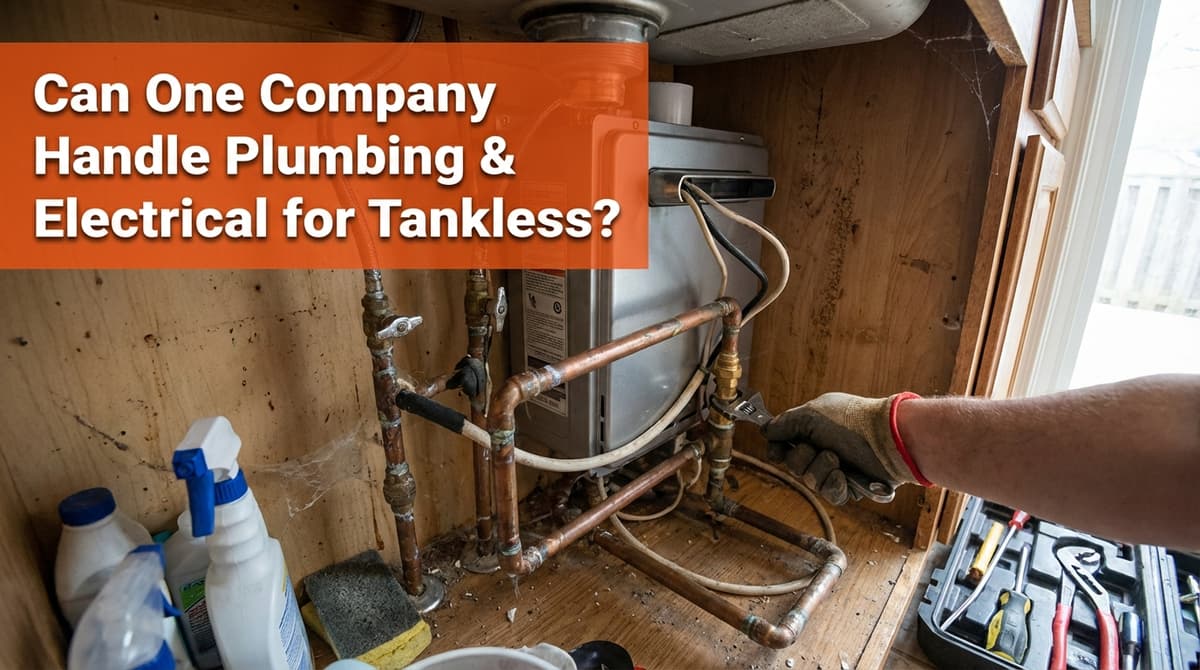
We recently got a call from a homeowner — let’s call him Mark — who asked a question we hear more and more these days:
“Do you install electric tankless water heaters, and can your company do both the plumbing and the electrical, or do you outsource one of them?”
Mark was ready to upgrade to an electric tankless unit in his home, but he didn’t want the headache of juggling multiple contractors or worrying about who was responsible for what. That call is a perfect example of what homeowners should think about before making the switch.
Yes, One Company Can Handle Both — If They’re Set Up for It
When Mark called, the very first thing he wanted to confirm was whether we could handle the whole job in-house. In our case, we’re licensed for HVAC, electrical, and (in many areas) the necessary plumbing work associated with water heater installations, so we told him we could handle the full installation.
But not every company is structured that way. Some only do plumbing and bring in an outside electrician. Others only do electrical and expect you to arrange your own plumber. Neither approach is wrong, but you should know exactly how it’s going to work before anyone starts cutting pipe or pulling wire.
Questions to Ask Any Company Up Front
- “Do you handle both the plumbing connections and the electrical work for tankless installs?”
- “If you use subcontractors, who manages them — you or me?”
- “Are the plumber and electrician both licensed and insured for this type of work?”
- “Who pulls the permit and schedules inspections?”
If a company hesitates or gives vague answers, that’s a sign to slow down and get clarity before moving forward.
Why Electric Tankless Installs Are More Than a Simple Swap
From the outside, an electric tankless water heater looks like a compact box on the wall. Behind the scenes, it can be one of the more demanding appliances in your home — especially on the electrical side.
When we send a tech out to look at a job like Mark’s, here’s what we’re assessing:
- Electrical service size: Many electric tankless units require a 200-amp service and multiple dedicated breakers.
- Panel capacity: Is there room in the panel, or will it need an upgrade or subpanel?
- Wire runs: How far is the unit from the panel, and what wire size is needed for a safe install?
- Water lines: Are existing hot and cold lines in the right location, or do they need to be rerouted?
- Shutoff and drains: Is there a shutoff, drain, and safe place for any future servicing or replacement?
That mix of tasks is exactly why coordination between plumbing and electrical work is so important — and why having one team responsible often makes life easier.
Pros and Cons of Using One Company for Everything
Advantages of a Single Contractor
- One point of contact: If something isn’t quite right, you’re not stuck between a plumber blaming an electrician and vice versa.
- Better coordination: The person sizing the unit, planning the pipe routes, and laying out the electrical can work from the same plan.
- Streamlined scheduling: Fewer delays while everyone waits on each other to finish their part.
- Clear warranty and accountability: You know exactly who stands behind the whole installation.
When Separate Trades Might Still Be Involved
There are cases where even a full-service company will coordinate with other specialists, for example:
- Major service upgrades: If your home needs a full service and meter upgrade, your utility may need to be involved.
- Complex plumbing changes: Older homes or remodels may require more extensive plumbing work.
In those situations, the key is that someone is clearly in charge of the project and communicating with you. That’s what you want to confirm when you book the estimate.
What to Know Before You Upgrade to Electric Tankless
On Mark’s call, after we confirmed that we handle the install, his next question was about pricing and estimates. Our answering service took his info — just like you heard in the transcript — and our service department followed up with the details.
Here’s what you should clarify with any company during that follow-up:
- Is the estimate free or paid? Some companies offer free estimates; others charge a diagnostic or consultation fee that’s applied toward the job.
- What exactly is included? Make sure the quote notes the water heater, materials, electrical work, permits, and any panel or wiring upgrades.
- Is there a site visit first? For electric tankless, a quick inspection of your panel and existing plumbing is often necessary for an accurate quote.
- What brands and sizes do you install? The right size depends on your home’s electrical capacity and your hot water needs.
How to Prepare Your Home for a Tankless Site Visit
Once Mark’s information was passed to our service department, the next step was to schedule a time for a tech to take a look. To make that visit go smoothly, you can:
- Clear access to your electrical panel and your current water heater area.
- Know your priorities: Endless hot water for showers, filling a big tub, or serving multiple bathrooms at once.
- Gather utility info: Recent electric bills can help us estimate operating costs and loads.
- List any past issues: Breakers tripping, dimming lights, or pressure problems are important clues for us.
With that information, we can tell you honestly whether an electric tankless unit is a good fit, what upgrades (if any) are needed, and whether one company — like ours — can truly handle everything from start to finish.
Bottom Line: Don’t Be Afraid to Ask Detailed Questions
Mark’s first question — whether we could do both plumbing and electrical without outsourcing — was exactly the right one. Before you commit to an electric tankless water heater, take a moment to:
- Confirm who is doing the plumbing and who is doing the electrical.
- Verify licenses, insurance, and permit responsibilities.
- Understand whether your quote includes panel or wiring upgrades.
- Make sure there’s a clear plan and one person responsible for the finished job.
If you’re thinking about an electric tankless upgrade and want one team to coordinate the whole project, we’re always happy to walk you through options, pricing, and what’s involved before you make the switch.