Flat-Rate vs. Hourly Plumbing Pricing: Homeowner Guide
Wondering whether flat-rate or hourly plumbing pricing is better? Learn how plumbers charge, what a service call covers, and how to compare estimates confidently.
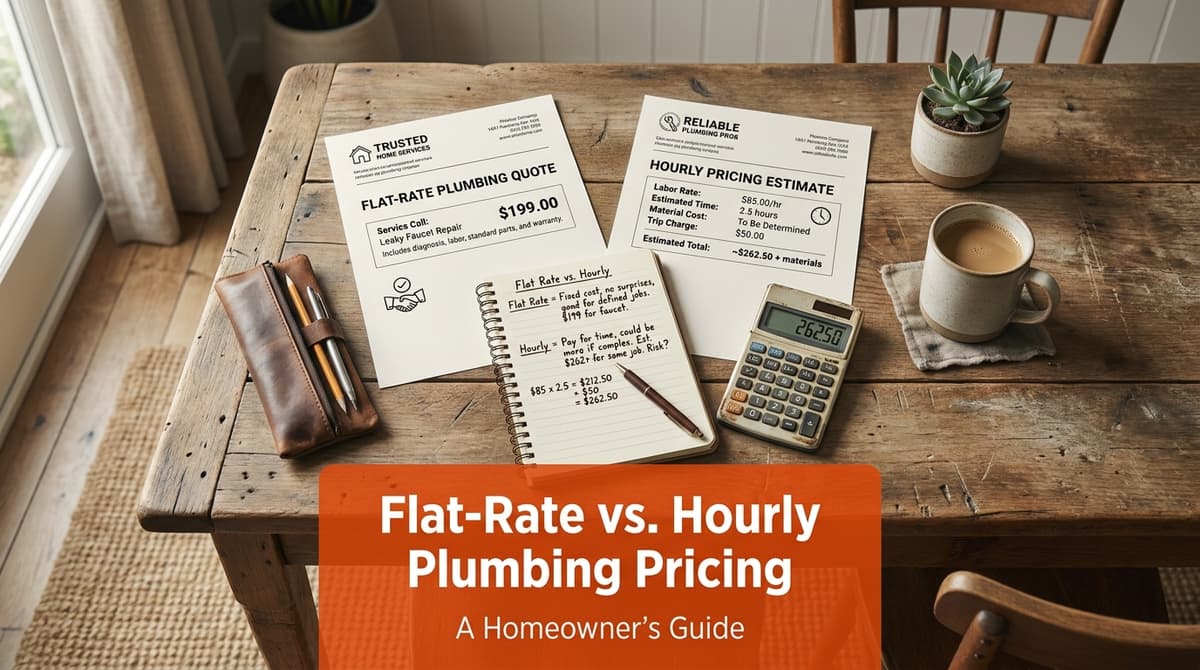
Flat-Rate vs. Hourly Plumbing Pricing: A Real-World Example
We recently got a call from a homeowner — let's call her Linda — who was doing exactly what we wish more people would do: her homework.
Linda had a short list of plumbing projects: a leaky drain and shaky faucet piping under the kitchen sink, possibly a new garbage disposal, and a P-trap issue under a bathroom vanity. Before she hired anyone, she wanted to understand how plumbers charge. Her big questions were:
- Do you charge by the hour or by the job?
- Do you give free estimates, or is there a fee for a service call?
- What exactly does that service call cover?
These are smart questions, and we walked through each one with her. In this post, we’ll share how we explained it, along with some tips to help you compare estimates confidently.
How We Charge: Flat-Rate Pricing Built from Time + Materials
When Linda asked whether we charge hourly or by the job, our honest answer was, “It depends on the job, but typically it’s not hourly — it’s based on the project itself.”
Behind the scenes, our pricing is built from two main pieces:
- Materials — the actual parts and supplies needed.
- Time — how long a trained, licensed plumber will realistically need to diagnose and fix the issue.
Instead of separating that into an hourly line item and a materials line item, we usually present it to you as a flat price for the job. For example, fixing a leaky drain under a sink might include the service call, new piping or fittings if needed, and labor to remove, replace, and test — all wrapped into one number.
For many homeowners, this feels more predictable than open-ended hourly billing. You know the cost up front, and it’s easier to compare one plumber’s proposal to another’s.
What a Plumbing Service Call Typically Covers
Another thing Linda wanted to understand was our service call fee. For standard plumbing issues, our diagnostic service call is $89. That’s very similar to what she’d experienced with HVAC work on her home.
Here’s what that type of plumbing service call usually includes:
- Travel and arrival — getting a licensed plumber to your door, on schedule.
- Diagnosis — inspecting the problem, testing, and confirming what’s actually going on.
- Upfront options — explaining what we found and giving you prices to repair, replace, or sometimes do nothing for now.
With a straightforward issue like Linda’s leaky drain, it’s very possible that our plumber could diagnose and fix it during that same $89 visit, depending on what we find and parts availability. In cases like that, we apply the visit toward the repair so you’re not paying twice for the same trip.
We also let Linda know that for smaller, visible projects, she could send us clear photos of the areas under her sinks. In many situations, we can create a rough estimate by email so she has a ballpark cost before anyone rolls a truck.
Flat-Rate vs. Hourly: Pros and Cons for Homeowners
So when might one pricing style make more sense than the other? Here’s how we helped Linda think it through.
- Flat-rate (per job) is often better when:
— The scope is clear (for example, replacing a P-trap or installing a garbage disposal).
— You want to avoid surprises if a task takes longer than expected.
— You’re comparing multiple bids and want apples-to-apples numbers. - Hourly can make sense when:
— The issue is unusual or very hard to access and scope in advance.
— You’re comfortable with some uncertainty and trust the contractor to work efficiently.
— You have a long punch list of small odds and ends to tackle in one visit.
In practice, many reputable plumbers price like we do: we calculate time and materials, then present a clear job price so you can decide before work starts. For Linda’s list of projects, flat-rate pricing for each task was the better fit — she prefers to know the bottom line and compare.
How to Compare Plumbing Estimates the Smart Way
Linda was talking to several companies, which we always encourage. The key is knowing what to ask so you’re truly comparing the same thing. Here are questions we recommended to her:
- Is this price flat or hourly? If hourly, ask for a realistic range of hours and what happens if it goes over.
- What exactly is included? Does the price include materials, permits (if needed), haul-away, and cleanup?
- Is the diagnostic fee applied to the repair? Some companies credit the service call if you approve the work.
- Who will be doing the work? A licensed, experienced plumber (like our in-house master plumber) is worth more than a handyman rate.
- What warranties do you provide? On both parts and labor, and for how long?
- Will I get everything in writing? A clear, written estimate and invoice protect both you and the contractor.
We also reminded Linda to look beyond just the number. One contractor might be slightly higher, but include better-quality parts, a stronger warranty, or a more thorough diagnosis so you’re not fixing the same leak twice.
Simple Tips for Getting Clear, Honest Plumbing Pricing
Before you say yes to any plumbing work, here are a few practical steps you can take, the same ones we walked through with Linda:
- Make a complete list of every issue you want checked during the visit — leaks, slow drains, wobbly faucets, strange noises. It’s often more cost-effective to handle several items in one trip.
- Ask for “good, better, best” options when it comes to repairs versus replacements so you understand your choices and long-term costs.
- Clarify what happens if the plumber finds something unexpected. Will they stop and talk to you before any additional charges? How will those be priced?
- Confirm payment terms — when payment is due, what forms are accepted, and whether there are financing or membership options that include plumbing inspections.
- Save photos and notes of past work and estimates. Just like Linda did with her HVAC system, having a history helps you and your plumber make better decisions.
If you’re the kind of homeowner who likes to do homework before making a decision, you’re on the right track. Whether you end up choosing flat-rate or hourly pricing, the most important thing is to understand exactly what you’re getting and to feel comfortable with the company standing behind the work.
And if you’re staring at a leaky drain, a suspect garbage disposal, or a funky P-trap under the vanity, we’re always happy to talk through your options, give you clear pricing up front, and help you pick the solution that fits your home and your budget.