Frozen AC Line? Causes, What to Do & When to Call Help
Seeing ice on your AC line? Learn why it happens, what you should (and shouldn’t) do, and when it’s time to call in a professional to protect your system.
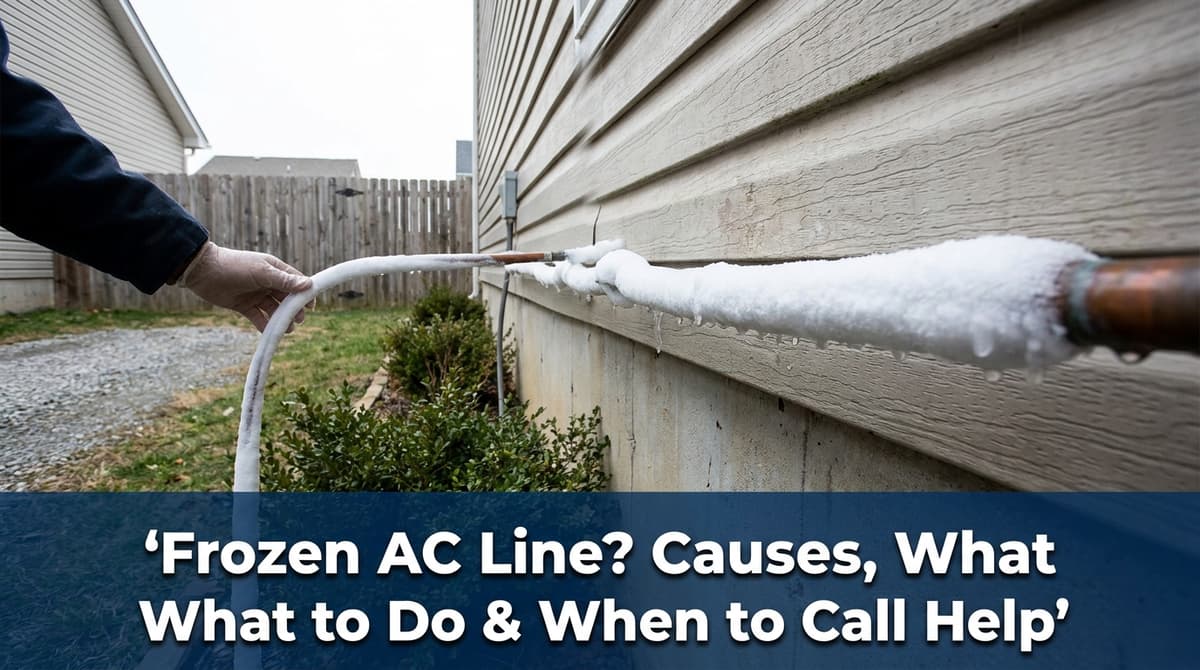
“My AC Line Is Frozen Solid…” – A Call That Sounds Familiar
We recently got a call from a homeowner — let’s call him Matt — who noticed his house getting warmer even though the air conditioner was running. When he checked outside, he saw exactly what a lot of panicked homeowners see this time of year: the copper line between the outdoor unit and the house was completely frozen over.
Matt did what most people do next: he shut the system off, started wondering if he had a refrigerant leak, and then picked up the phone. By the time we spoke, the system had been off since the previous evening, and he was trying to decide what to do next and whether it was safe to try turning it back on.
If you’re staring at a frozen AC line right now, you’re in the same boat Matt was in — and you’re asking all the right questions. Let’s walk through what’s really going on, what you should do, what you absolutely shouldn’t do, and when it’s time to bring in a professional.
Why Does an AC Line Freeze in the First Place?
Your air conditioner works by circulating refrigerant between the indoor coil (evaporator) and the outdoor unit (condenser). Under normal conditions, that refrigerant gets cold enough to cool your air, but not so cold that ice forms on the coil or the copper lines.
When something’s wrong, the refrigerant temperature and pressure drop too low, and moisture in the air freezes on the coil and lines. Once ice starts, it can spread quickly, just like it did at Matt’s home.
Here are the most common reasons we find during service calls:
- Restricted airflow
Dirty filters, blocked return vents, closed supply registers, or a matted-over indoor coil reduce airflow, letting the coil get too cold and freeze. - Low refrigerant level
If there’s a leak, pressure drops, the refrigerant gets colder than it should, and ice starts forming. Low refrigerant is a symptom of a leak, not something that “just happens.” - Blower or fan issues
If the indoor blower motor is weak, not running at all, or the outdoor fan isn’t moving air across the coil, temperatures inside the system can swing out of range and cause freeze-ups. - Thermostat or control problems
If the system runs constantly because of a thermostat issue or improper sizing, it may never get a break, and the evaporator coil can eventually ice over. - Drainage and humidity issues
On very humid days, excess moisture plus poor drainage or a partially clogged condensate line can contribute to freezing, especially when combined with other issues.
What You Should Do Right Away if You See Ice
Matt’s first instinct was exactly what we recommend to homeowners: he turned the system off as soon as he noticed the frozen line. That single step can prevent more damage.
Here’s a safe step-by-step checklist you can follow:
- Turn the system OFF at the thermostat
Set the thermostat to “Off” for cooling. If you’re comfortable doing so, you can switch the fan to “On” (fan only) to help move warm indoor air across the coil and speed up thawing. - Check your air filter
Pull the filter and inspect it. If it’s dirty or clogged, replace it immediately. A cheap, dirty filter is one of the most common reasons we see frozen lines. - Clear vents and returns
Walk through the house and make sure furniture, rugs, or curtains aren’t blocking supply vents or return grilles. Open any registers that were shut. - Give the system time to fully thaw
Depending on how much ice you have, it can take several hours for everything to melt. Running the fan only can help, but resist the urge to kick the cooling back on too soon. - Put towels or a pan near the indoor unit
As ice melts off the coil, you might get more water than usual at the air handler or furnace. A few towels can keep that from turning into a mess.
Once the unit is completely thawed, and you’ve verified a clean filter and good airflow, you can cautiously turn the AC back to “Cool” and monitor it. If it ices up again within a few hours, stop there and call a pro — you’re dealing with more than a simple airflow restriction.
What You Should Not Do (Even If You’re Handy)
A frozen line makes a lot of homeowners want to “just fix it real quick.” We get it. But there are a few things we strongly advise against:
- Don’t keep running the AC while it’s frozen
This can cause the compressor to overheat or fail, turning a repair into a major replacement. Matt did the right thing by shutting his off immediately. - Don’t chip or scrape the ice
Using tools to break the ice off can damage the copper line, insulation, or coil. Let it thaw naturally. - Don’t “top off” refrigerant yourself
Refrigerant handling requires certification, and adding more without finding the leak is like putting air into a tire with a nail still in it. You’ll waste money and risk long-term damage. - Don’t assume it’s fine just because it cools again
Sometimes, after thawing, an AC will seem okay for a day or two. If it froze once without an obvious cause like a dirty filter, it’s likely to freeze again.
When It’s Time to Call a Professional
When Matt called, he’d already done what he could as a homeowner: he shut the system off and gave it time to thaw. At that point, scheduling a technician was the right move.
You should bring in a licensed HVAC professional if:
- The line or indoor coil freezes again after you’ve replaced the filter and confirmed good airflow.
- You notice hissing, bubbling, or oily spots on the refrigerant lines or around the unit (possible leak).
- The system runs, but the air from the vents is barely cool or warm, and the temperature in the home keeps climbing.
- You see water around the indoor unit after thawing that doesn’t stop once things should be dry.
On a typical frozen-line service call, we’ll:
- Confirm proper airflow and inspect the filter, ductwork, and blower.
- Check refrigerant pressures and temperatures.
- Look for leaks or damage in the lines and coils.
- Test electrical components, fan motors, and thermostat operation.
From there, we can give you clear options — whether it’s repairing a leak, cleaning a coil, replacing a failing component, or discussing longer-term solutions if the system is older.
How to Prevent Your AC Line from Freezing Again
Once we get a system like Matt’s back up and running, the next conversation is always about prevention. A few simple habits go a long way:
- Change your air filter regularly (every 1–3 months, depending on type and usage).
- Keep vents and returns clear of furniture and dust buildup.
- Schedule annual professional maintenance to catch low refrigerant, weak components, or dirty coils before they cause a freeze-up.
- Pay attention to run times — if your system starts running constantly just to maintain temperature, have it checked.
If your copper line is already wearing an ice coat, you’re not alone — we see this every season. Follow the safe steps above, avoid the common “DIY mistakes,” and don’t hesitate to reach out. We’re happy to come out, get to the bottom of the problem, and make sure your home is comfortable again.