Furnace Tune-Up vs. Service Call: What You Really Need
Heat not working right? Learn the difference between a furnace tune-up and a service call, and how to choose the right visit when your system starts to lag.
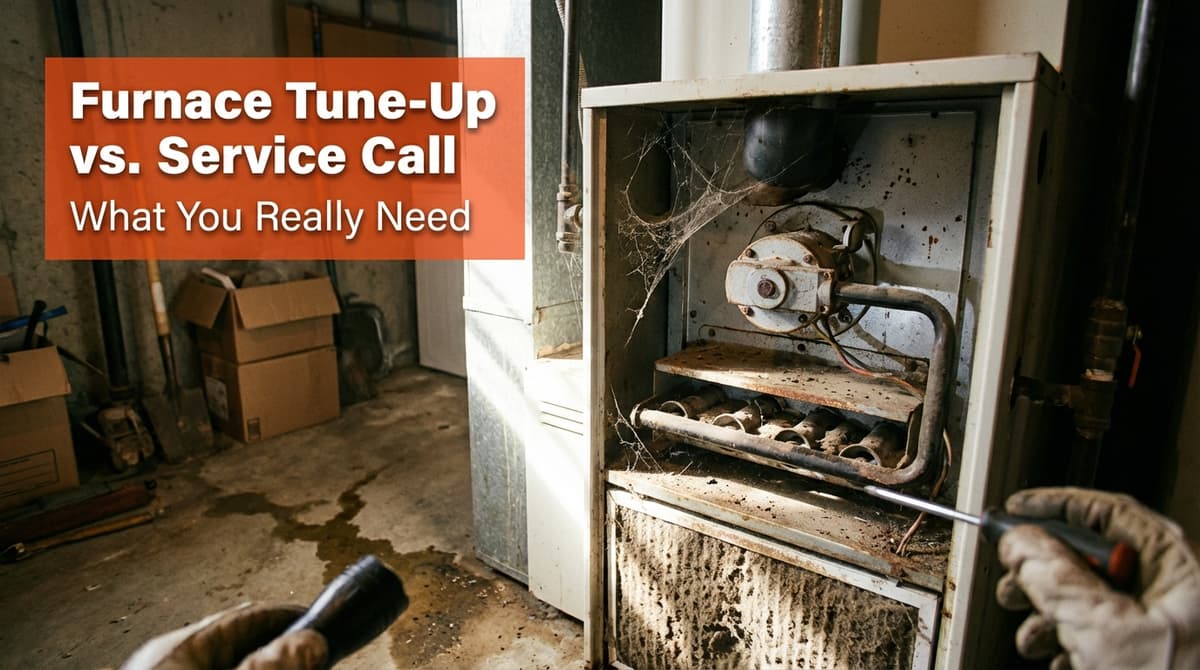
When the Heat Lags and You’re Not Sure What to Book
We recently got a call from a customer — let’s call her Emily — who had just signed up for our maintenance plan on a rental home. Earlier in the winter, her tenants complained that the heat wasn’t working well. Another company came out, did a quick clean, and got it running again, but they warned it really needed a full cleaning and inspection.
Now, a few weeks later, the furnace was starting to lag again. Emily told us, “I know I get an annual tune-up with my membership, but will that actually fix whatever’s going on, or do I need a service call instead?” That’s a smart question — and one we hear a lot.
We walked her through exactly what a furnace tune-up includes, how it differs from a service call, and which one makes the most sense when the heat isn’t keeping up. Let me share the same guidance with you.
What a Furnace Tune-Up Actually Includes
When Emily asked if a tune-up would “really check out whatever issues might be going on,” we explained what our standard maintenance visit looks like. A true tune-up is more than a quick vacuum and a filter change.
On a typical furnace tune-up, we:
- Check system pressures and performance to make sure the furnace is firing and venting correctly.
- Inspect the ductwork for obvious airflow problems, leaks, or blockages that can make rooms feel uneven or “laggy.”
- Check and replace the filter if needed, since a clogged filter is one of the most common reasons for poor performance.
- Test the thermostat to confirm it’s reading and communicating correctly with the furnace.
- Inspect critical safety components like the flame sensor, ignitor, and gas connections.
- Clean internal components that commonly get dirty, which can reduce efficiency and reliability.
The goal of a tune-up is to keep a mostly healthy system running safely and efficiently, catch small issues early, and help prevent breakdowns. Think of it like an annual physical for your furnace.
What a Service Call Is (and When It Makes More Sense)
A service call is different. With Emily’s rental home, we could see from prior notes that the flame sensing rod was extremely dirty and might even need to be replaced. The tech had cleaned it once just to get the furnace going again, but warned that deeper service and possibly a new sensor might be needed.
When something is already acting up — the heat comes and goes, the furnace keeps shutting off, or it won’t start at all — that’s when we start leaning toward a service call instead of a routine tune-up.
On a service call, we focus on:
- Diagnosing the specific problem causing the furnace to fail or underperform.
- Testing individual components like the flame sensor, ignitor, blower motor, and control board.
- Confirming safety if there are any unusual smells, noises, or frequent shutdowns.
- Presenting repair options and prices so you can decide how to move forward.
In Emily’s case, we told her, “If we start a tune-up and discover we can’t complete it because a part like the flame sensor is failing, we’ll need to pause and switch to a repair-focused visit anyway.” That’s exactly the kind of situation where a service call can be the better first step.
How We Decide: Tune-Up or Service Call?
Here’s the simple way we helped Emily decide what she really needed for that rental property. You can use the same guidelines at your home:
When a Tune-Up Is the Right Choice
A furnace tune-up is usually best when:
- The system is running, but you just want to maintain it.
- It’s been a year or more since the last professional maintenance.
- You’ve just moved in or signed up for a membership and want a baseline inspection.
- You’re not noticing specific, repeat problems (like frequent shutdowns or error codes).
This was part of Emily’s goal: she wanted that deeper, more detailed clean and inspection the previous tech had recommended, especially since the system “hadn’t been serviced in so long.”
When a Service Call Makes More Sense
A service call is usually the better starting point when:
- The furnace isn’t keeping up or stops working entirely.
- You’ve had a tech do a “minimal clean” just to get it running, and the same issue is back.
- The system starts, but then shuts off quickly — often a sign of a dirty or failing flame sensor or airflow issues.
- You smell something unusual, hear strange noises, or see the furnace locking out repeatedly.
In the notes we reviewed for Emily’s property, the tech had already flagged the flame sensor as extremely dirty and possibly failing, and mentioned potential airflow issues. That kind of history is a strong hint that a diagnostic repair visit is the smarter move.
How Memberships and Fees Play Into the Decision
Another question Emily had was about cost: if she used her membership tune-up, would that also cover fixing the problem? Here’s how we explained it.
With our members, we can handle it a couple of ways:
- Start with a tune-up: We do the full maintenance. If everything checks out, great — you’re covered. If we hit a failing part we can’t just “tune,” we pause and talk through repair options.
- Start with a service call: We treat it as a diagnostic visit (for example, a $59 fee in Emily’s case), then pinpoint the issue. Because she’s a member, that diagnostic fee can be waived with the repair, and she only pays for the actual fix.
For a system that’s already been limping along and was only given a minimal clean, we often recommend starting with the service call. That way you’re not paying for a full tune-up we might not be able to complete if a key part has failed.
How Often You Should Schedule Tune-Ups
Emily’s rental furnace “hadn’t been serviced in so long,” which is exactly why a small issue like a dirty flame sensor turned into repeat trouble. To avoid that, we generally recommend:
- Once a year for gas furnaces in most homes.
- Before heating season (early fall) so problems are found before the first real cold snap.
- Twice a year total if you also have central air — one visit for heating, one for cooling.
If your furnace is older, serving a rental with lots of filter neglect, or you’ve had several “quick fixes” in the past, staying on that annual schedule is especially important. Regular tune-ups keep simple dirt and wear from turning into full-blown breakdowns that require pricey emergency calls.
Still Unsure? Tell Us What the Furnace Is Doing
When customers like Emily call in, we don’t just blindly book a tune-up or a service call. We ask a few key questions:
- Is the furnace running at all, or completely dead?
- Did another company recently do a “quick clean” or temporary fix?
- Has anyone mentioned a specific part — like a flame sensor, ignitor, or airflow issue?
- How long has it been since your last full maintenance visit?
Your answers tell us whether you’d get more value from a preventative tune-up or a focused diagnostic service call. And if you’re a member, we’ll also look at how to apply your benefits to keep costs as low and predictable as possible.
If your heat isn’t working well and you’re not sure what to schedule, just describe what the furnace is doing (or not doing). We’ll walk you through the same decision process we used with Emily so you get the right visit — and warm, reliable heat — the first time.