Is Frost on My Heat Pump Normal in Winter?
Noticing frost or ice on your heat pump? Learn what’s normal in cold weather, when it signals trouble, and how we decide if you really need a service call.
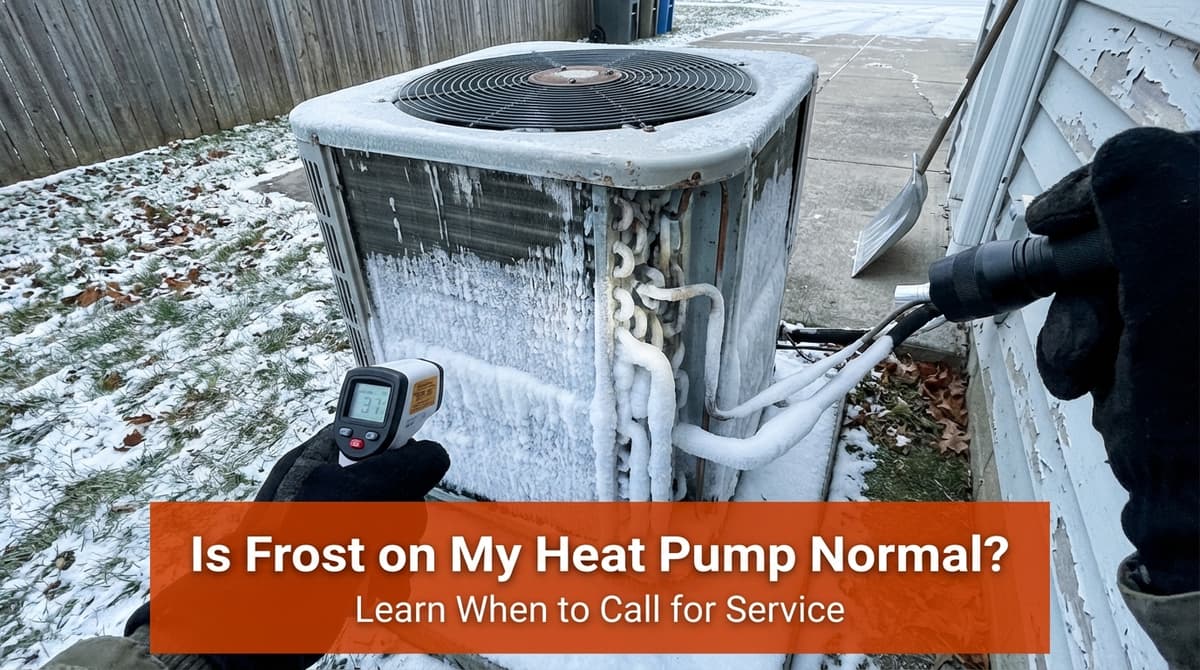
We recently got a call from a homeowner — let’s call him Daniel — who was worried about his heat pump. It had been extremely cold for several days, and he noticed the outdoor unit was frosting over. His home was staying around 68–69 degrees (right where he set the thermostat), his electric backup heat was kicking on, and the fan blades were clear — but the coils were covered in frost.
Daniel’s big question was the same one we hear every winter: “Is this normal, or do I need someone to come look at it? I don’t want to waste anyone’s time.” In our experience, that’s a smart question to ask — because some frost is completely normal, and some is a sign your system needs attention.
How We Talk Homeowners Through Frost on a Heat Pump
When someone calls us about frost or ice on their heat pump, we start by asking the same kinds of questions we asked Daniel:
- Is the house staying at the temperature you set?
- Is the outdoor fan spinning normally?
- Is the frost just on the coil fins, or is the whole unit encased in ice?
- Have you noticed steam or a brief blast of cooler air indoors?
- Has the weather been unusually cold or damp compared to normal?
Those answers tell us whether we’re likely looking at normal cold-weather operation or a problem that needs service.
What’s “Normal” Frost on a Heat Pump?
A heat pump pulls heat from the outdoor air, even when it’s cold outside. As it runs, moisture in the air can freeze on the outdoor coil. In cold, damp weather, it’s totally normal to see:
- A light to moderate layer of frost on the outdoor coil
- Frost that comes and goes throughout the day
- Steam rising from the unit every so often
- The outdoor fan stopping briefly during a defrost cycle
Your heat pump has a built-in defrost mode. Every so often, it will switch itself temporarily into “air conditioning” mode to warm up the outdoor coil and melt the ice. Your backup heat (like Daniel’s electric heat coils) kicks in to keep the air inside your home comfortable while that’s happening.
If your home is holding the temperature you set, the frost melts off periodically, and you only see ice on the coils (not the fan blades or the entire unit), we usually reassure customers that what they’re seeing is normal winter behavior.
Signs the Frost on Your Heat Pump Is a Problem
On Daniel’s call, we told him we’d have a technician look at a picture of his unit, because there are times when frost or ice isn’t normal. Here are the red flags we tell homeowners to watch for:
1. The unit is encased in thick ice
It’s one thing to see a frosty coil. It’s another if:
- The entire outdoor unit is coated in thick ice
- You see ice bridging between the fins and the fan guard
- The fan blades themselves are iced over
When we hear that, we suspect the defrost cycle isn’t working properly, or there could be an airflow or refrigerant issue.
2. The system can’t keep up with your thermostat
We always ask, just like we asked Daniel, “Is the house staying where you set the thermostat?” If you notice:
- The temperature keeps drifting below your set point
- The system runs constantly and still feels chilly
- Rooms that used to be comfortable are now cold
and you also see heavy frost or ice outside, that’s a strong sign the unit is struggling and should be checked.
3. The unit never seems to defrost
In our climate, we expect a heat pump to cycle into defrost mode regularly in very cold or damp weather. If you never see steam, never hear the fan pause, and the frost keeps building up and never clears, the defrost controls or sensors may not be working correctly.
4. Strange noises or obvious damage
If we hear about scraping, grinding, or buzzing noises along with frost, that moves it into the “call us now” category. Ice can damage fan blades, restrict airflow, and stress the compressor if it’s allowed to build up.
Simple Checks You Can Do Before Calling Us
We never want homeowners to feel like they’re “wasting our time,” the way Daniel worried. We’re always happy to talk it through, but here are a few quick checks we often walk people through over the phone:
- Check your air filter: A clogged filter can reduce airflow and make the system work harder, which can contribute to icing problems.
- Clear around the outdoor unit: Make sure leaves, snow, and debris are cleared at least 18–24 inches around the unit for good airflow.
- Look for obvious damage: Things like bent fan blades, sagging panels, or disconnected wires are all reasons to shut it down and call for service.
- Watch it for a bit: If it’s cold and frosty, give the system 30–60 minutes and see if the frost lessens or you notice a defrost cycle kick in.
If everything else looks good, your home is comfortable, and the frost seems to come and go, we’ll usually tell you what we told Daniel: it’s likely operating the way it should in this weather, and we don’t want to sell you a service call you don’t need.
When We Recommend a Service Visit
There are some situations where we do recommend getting a technician out to your home. Based on what we’ve seen in the field, you should schedule service if:
- The unit is encased in ice or the fan blades are frozen
- The frost never melts and only gets thicker over time
- Your home can’t stay at the temperature you set
- Your energy bills suddenly spike without explanation
- You hear unusual noises or smell burning or electrical odors
In some cases, especially when it’s freezing and the system isn’t defrosting, the underlying issue can be low refrigerant, a failing defrost board, bad sensors, or a failing outdoor fan. Those are things a homeowner can’t safely diagnose without tools and training, which is why we send a pro.
Not Sure If It’s Normal? We’re Happy to Look
With Daniel, we had him send over a picture so one of our technicians could lay eyes on the frost pattern before deciding whether a visit was necessary. We do that a lot in extreme weather — sometimes a quick look is all it takes to tell you, “You’re fine, this is just winter doing its thing,” or “Let’s get you on the schedule before this turns into a bigger problem.”
If you’re staring at a frosty heat pump and wondering whether it’s normal, reach out. We’d rather answer a quick question and ease your mind than have you wait until a simple frost issue turns into a no-heat emergency.