Buying a Home? Handling HVAC & Plumbing Issues Fast
Under contract on a home and your inspection turned up HVAC or plumbing issues? Learn how to evaluate the problems, negotiate repairs, and decide when to walk away.
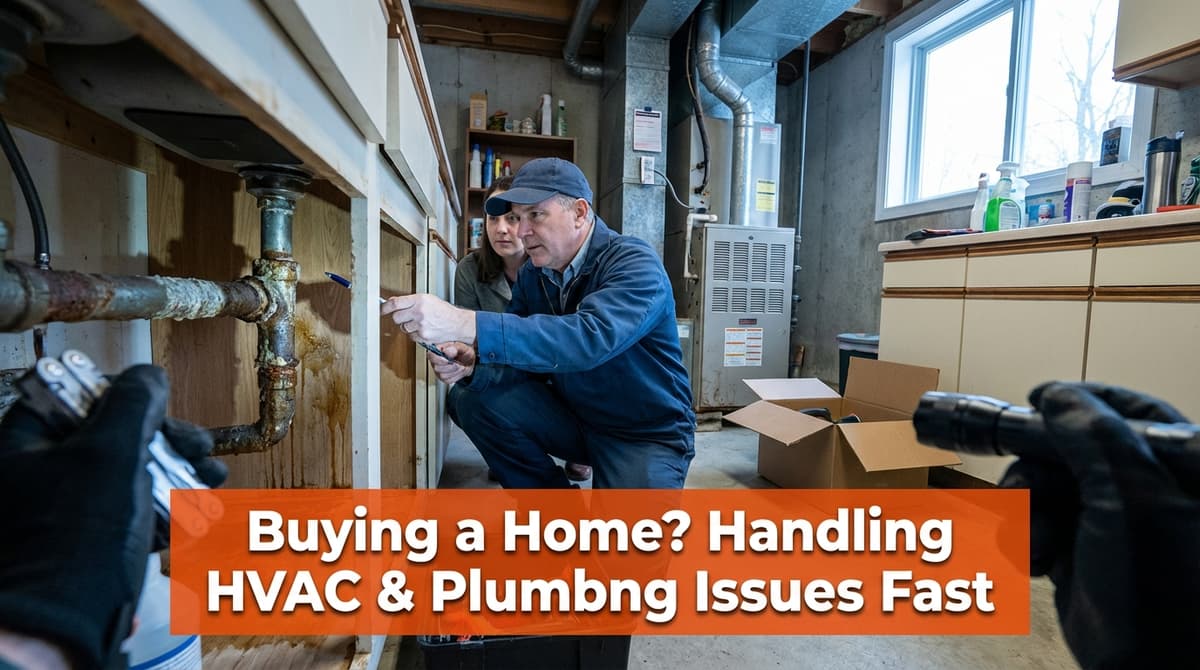
Buying a Home? How HVAC and Plumbing Can Change the Deal
We recently got a call from a homebuyer — let’s call him Mark — who was under contract on a house when his inspection report threw a few curveballs. The inspector had concerns about the furnace: it looked like the AC section on top was leaking into the burner compartment, there might be mold around the furnace area from condensation, and the system had trouble firing up. On top of that, there was a leak at the shower that could be coming either from the door (simple fix) or from the valve behind the wall (bigger deal).
Mark’s question to us was simple: “We still like the house. How do we handle these HVAC and plumbing issues the inspector found?” If you’re buying a home, you might be asking yourself the same thing.
Step One: Understand What Your Inspector Really Found
Home inspectors are great at spotting red flags, but they don’t tear systems apart or diagnose them the way a licensed HVAC or plumbing contractor does. In Mark’s case, the inspector showed him signs of moisture and possible mold around the furnace, suspected AC condensation leaking into the furnace cabinet, and noted trouble getting the furnace to start.
Here’s how we suggest you read those findings:
- Water or condensation around a furnace usually points to a clogged or misrouted condensate drain, a rusted drain pan, or air leaks causing excess condensation. All fixable, but the damage it caused (like mold or rusted components) can range from mild to severe.
- Trouble firing up the furnace could be as simple as a dirty flame sensor or as serious as a failing control board, cracked heat exchanger, or unsafe combustion.
- “Possible mold” near HVAC is a sign that moisture has been present for a while; we look both at the source of moisture and whether the growth is limited to surfaces or has spread.
- Shower leaks might come from the door or caulk (minor repair) or from the valve and piping inside the wall (more invasive work and potential hidden damage).
So don’t panic when you see those notes, but don’t ignore them either. They’re your cue to bring in a specialist for a closer look.
Step Two: Get a Focused HVAC and Plumbing Evaluation
With Mark, we scheduled a visit specifically to verify and price out what the inspector had flagged. We asked his agent to meet us at the property and had Mark send the inspection report ahead of time so our technician knew exactly where to start.
That’s what we recommend for any buyer:
- Share the inspection report with the HVAC/plumbing company before the visit.
- Request written estimates for both repair and, if relevant, replacement options.
- Ask about remaining life expectancy of the furnace, AC, and water heater, not just whether they “work today.”
- Clarify safety concerns (gas leaks, venting issues, backdrafting, active leaks) so you know what’s urgent.
In Mark’s case, besides giving estimates, we also offered a full system inspection option: checking electrical connections, refrigerant levels, coils, filters, and overall performance. For a buyer, that kind of deeper look can be worth it on an older system.
Step Three: Use the Findings in Negotiations
Once you have clear estimates from a licensed pro, those numbers become tools in your negotiations with the seller. Most of our real estate buyers use the estimates in one of three ways:
- Ask the seller to make repairs with a licensed contractor before closing (and request invoices for your records).
- Request a credit or price reduction at closing so you can choose your own contractor and solutions.
- Split the cost if the issues are borderline — not catastrophic, but not insignificant either.
Keep in mind, almost everything is “fixable”, as we told Mark. The real questions are: how much will it cost, how urgent is it, and are you comfortable with that given the overall house and budget?
Homebuyer Checklist: After You Get the Inspection Report
To keep things simple, here’s a quick checklist you can follow when HVAC or plumbing problems pop up in your report:
- Flag all HVAC and plumbing notes in the report with a highlighter.
- Call a licensed HVAC/plumbing contractor and send them the full report before they visit.
- Ask for repair vs. replacement options with clear, written pricing.
- Confirm safety issues and what must be addressed before move-in.
- Discuss findings with your agent and decide whether to request repairs, credits, or a price reduction.
- Keep all estimates and reports as part of your home records after you close.
When Are HVAC and Plumbing Problems Deal-Breakers?
Most of the time, issues like Mark’s — a leaking condensate line, some localized mold from moisture, or a shower leak — are negotiation points, not deal-breakers. They’re common, especially in older homes, and we fix them every day.
You might consider walking away if:
- Multiple major systems (furnace, AC, water heater, and plumbing) are all at the end of their life and the seller won’t budge on price.
- There’s extensive, hidden water damage or mold that will require major remediation.
- A contractor raises serious safety or code concerns that the seller refuses to address.
But in many cases, a solid estimate and a fair negotiation turn “scary” inspection notes into manageable projects.
Moving Forward with Confidence
Buying a home will always come with surprises, but HVAC and plumbing issues don’t have to derail your plans. As we told Mark, the key is to get clear information from a specialist, put real numbers to the repairs, and then use that information to make a smart decision with your realtor.
If you’re under contract on a house and your inspection report has you worried about the furnace, AC, or plumbing, bring in a pro early. A focused evaluation and honest estimate will help you decide whether to repair, renegotiate, or, in rare cases, walk away — and you’ll go to the closing table knowing exactly what you’re getting.