Understanding Your HVAC Warranty: Parts, Labor & Costs
Confused about your HVAC warranty? Learn what parts and labor really cover, what isn’t included, and what to expect cost-wise when you call for a warranty visit.
“My AC’s Under Warranty… So Why Am I Still Paying?”
We recently got a call from a homeowner — let’s call her Linda — who had a three-year-old Rheem system in her new home. Her thermostat had power, the indoor fan was blowing, but the outdoor unit wouldn’t come on at all.
She’d looked up her model online and saw that it was still “under warranty.” The manufacturer’s website even suggested calling an authorized contractor like us. But when we started talking through next steps, the questions came fast:
- “If it’s under warranty, why is there a $59 diagnostic fee?”
- “What parts are actually covered?”
- “Do I still have to pay labor?”
- “What about refrigerant?”
If you’ve ever wondered the same things, you’re not alone. HVAC warranties can be confusing, and the fine print really matters. Let’s break it down in plain language so you know what to expect before you schedule a warranty service visit.
Parts vs. Labor: The Big Warranty Difference
On Linda’s call, we explained that her system likely still had a parts warranty, but the labor warranty was probably expired. That’s extremely common and a key point many homeowners don’t realize.
What a parts warranty usually covers
A standard manufacturer parts warranty typically pays for the defective component itself — not the trip, not the technician’s time, and not every material related to the repair. On many AC and heat pump systems, common covered parts include:
- Compressors
- Fan motors (indoor and outdoor)
- Capacitors and contactors
- Control boards
- Some sensors and internal components
In Linda’s case, if her outdoor unit needed, say, a capacitor or contactor, the part itself would likely be free under warranty. But that doesn’t mean the entire visit is free.
What a labor warranty usually covers
A labor warranty, when you have one, covers the cost of the work to replace the failed part — the technician’s time and some associated labor charges. This is where it varies:
- New construction systems (like Linda’s): often include only one year of labor.
- Replacement systems installed by a contractor: may come with 1–3 years of labor, depending on the installer and any extended warranty packages.
- Extended warranties: sometimes available at an extra cost and can extend labor coverage up to 10 years in certain cases.
On our call, we told Linda that because her system was about three years old and installed in new construction, the odds of it still being under a labor warranty were “pretty minimal.” That’s usually how it goes for builder-installed systems.
Why You Still Pay a Diagnostic Fee
When Linda asked, “If it’s under warranty, do I have to pay for anything?” we walked her through the process. For her visit, we quoted a $59 diagnostic service call. That’s a common structure in our industry.
The manufacturer warranty covers parts, but they don’t pay us to:
- Drive to your home
- Inspect and test the system
- Identify exactly which component failed
- File warranty paperwork and order parts
That’s what the diagnostic fee pays for. Once we’ve diagnosed the issue, we can tell you:
- Whether the failed part is under warranty
- What, if anything, is covered for labor
- What your out-of-pocket cost will be before we proceed
We always get your approval before performing a repair so you’re not surprised by a bill.
Common HVAC Costs That Aren’t Covered
Even with a great parts warranty, there are certain items that are almost never covered by the manufacturer. When we talked with Linda, we specifically mentioned one of the big ones: refrigerant.
Typical non-covered items
- Refrigerant (Freon, R‑410A, etc.) – If your system needs a recharge due to a leak or repair, the refrigerant itself is usually your cost.
- Diagnostic/Trip charge – The fee to come out, inspect, and diagnose the system.
- Most labor after the initial labor warranty expires.
- Maintenance items – Filters, drain cleaning, and routine tune-ups aren’t warranty issues.
- Damage from neglect or improper use – For example, running the system with a severely clogged filter.
So even if your compressor is covered, if the repair requires several pounds of refrigerant and significant labor, you’ll still have some costs.
New Construction vs. Replacement: Why It Matters
One thing that surprised Linda was how much the original installer and type of install affect coverage. Here’s the rule of thumb we shared with her:
- New construction (builder-installed systems): commonly 10-year parts (when registered) and 1-year labor, sometimes through the builder only.
- Replacement systems (you hired a contractor later): often 10-year parts plus 1–3 years labor, depending on the contractor’s program.
Two houses with the same brand and nearly identical equipment can have very different labor coverage because of how and by whom the system was installed.
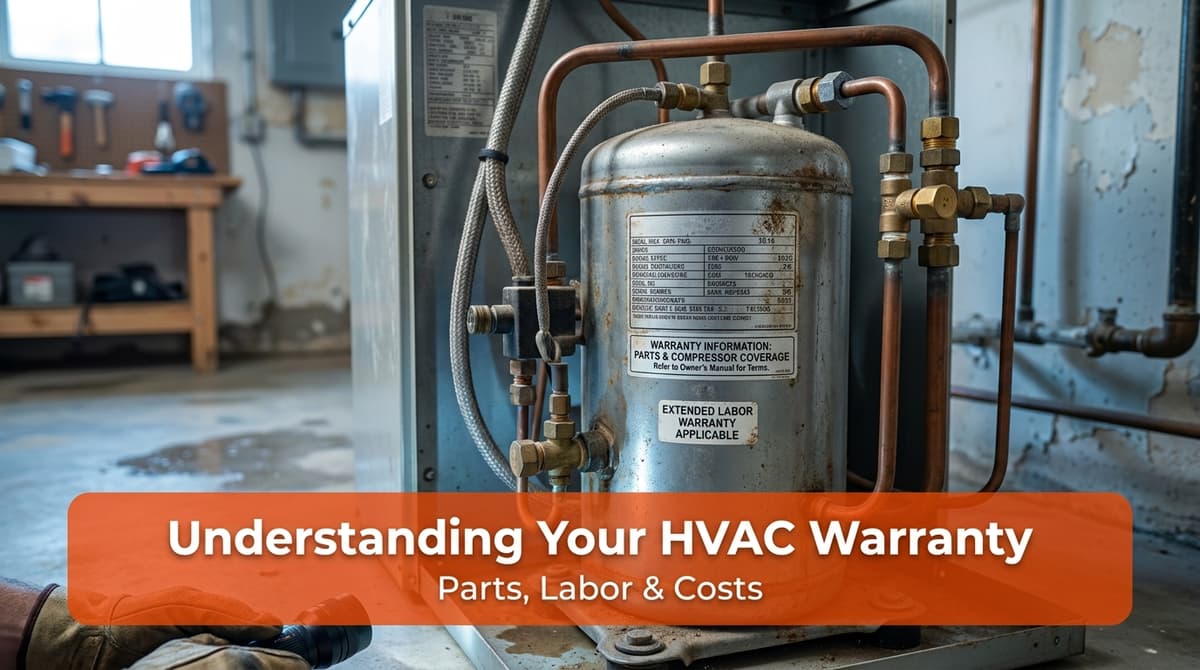
How to Check Your Unit’s Warranty & Data Plate
When Linda called, we told her we couldn’t confirm her warranty status without seeing the data plate on her unit. You can check yours the same way before you call.
Step 1: Find the data plate
Look for a metal or durable sticker label on:
- The outdoor unit (condenser) – usually on the side or back
- The indoor unit (air handler or furnace) – often on the front panel or inside a removable door
You’ll want the:
- Model number
- Serial number
- Manufacturer name
Step 2: Check registration
Most manufacturers have an online warranty lookup where you can enter your serial number to see:
- If the system was registered
- How many years of parts coverage you have
- Any extended or special coverages
If you’re not sure how to read what you’re seeing, you can snap a photo of the data plate and send it to your HVAC contractor. That’s what we offered to do for Linda: review her data plate, verify the dates, and confirm whether parts and labor were still covered.
What to Expect Cost-Wise on a Warranty Service Call
Putting it all together, here’s roughly what a typical warranty visit looks like for many homeowners:
- Diagnostic trip fee – A set amount to come out and find the problem (like our $59 diagnostic for Linda).
- Warranty check – We verify your parts and labor coverage based on model, serial, and install date.
- Repair estimate – If parts are covered, you’ll usually see a bill for:
- Labor to perform the repair (unless you still have labor coverage)
- Refrigerant, if needed
- Any non-covered materials or accessories
Before we touch a wrench, we go over the findings and cost so you can decide whether to move forward.
How to Make the Most of Your HVAC Warranty
To wrap up, here’s the advice we give homeowners like Linda who want to avoid surprises:
- Register your equipment right after installation to maximize parts coverage.
- Keep your paperwork: installation invoice, warranty documents, and builder info if it’s new construction.
- Know your dates: when the system was installed and when parts/labor coverage ends.
- Stay on top of maintenance so you don’t void your warranty through neglect.
- Ask upfront what your diagnostic fee and typical labor rates are when you call for service.
When your AC or heat pump stops on a hot day, the last thing you need is warranty confusion on top of it. A little information upfront goes a long way toward making the repair process smoother, clearer, and less stressful on your wallet.