Indoor Fan Running, Outdoor AC Unit Off? What to Do Next
Indoor fan running but outdoor AC unit dead? Learn common causes, safe DIY checks, and when it’s time to call an HVAC pro to get your home cool again.
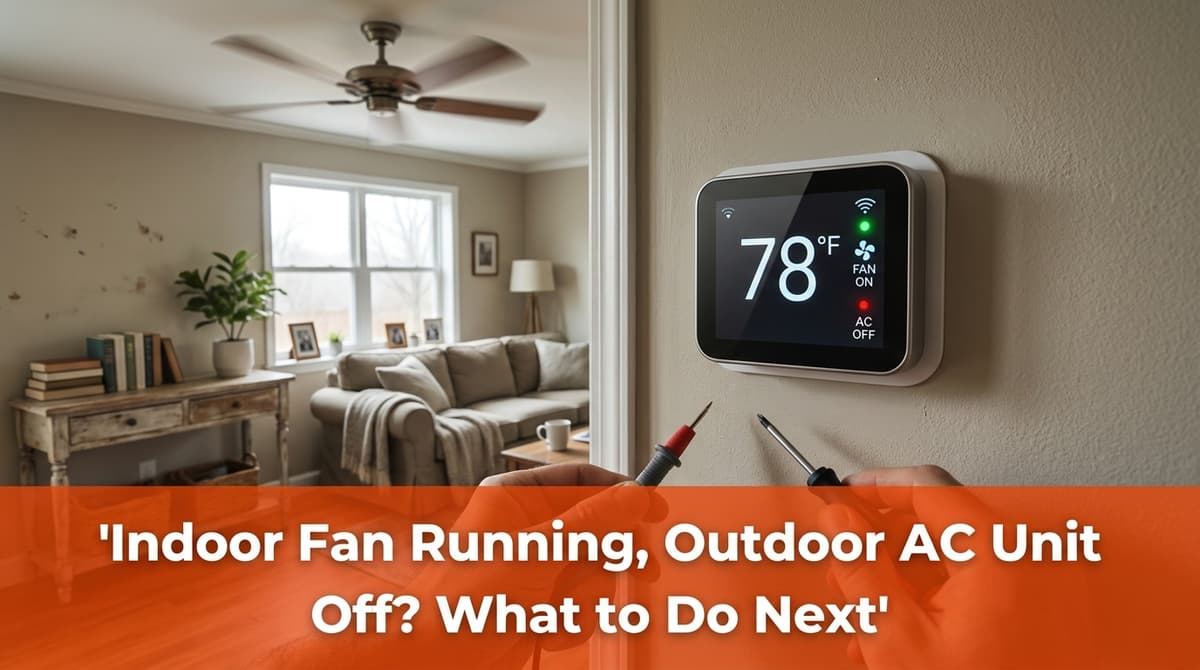
AC Not Cooling, Indoor Fan Running, Outdoor Unit Dead Silent
We recently got a call from a homeowner — let’s call him Mike — who said, “The fan in the house is running, but the unit outside is not, and the house just won’t cool down.”
That exact situation is one we see all the time: the indoor blower is pushing air through the vents, but the outdoor AC unit is completely off. From the thermostat’s point of view, everything looks “on,” yet the home is getting warmer by the hour.
In Mike’s case, he was worried his family wouldn’t survive the weekend without air conditioning, so we walked him through what he could safely check before our technician arrived. Those same steps can help you figure out whether it’s a simple issue you can address yourself, or something that really does need a professional.
Why Your Indoor Fan Can Run While the Outdoor Unit Is Off
Your central AC system is really two main pieces of equipment working together:
- Indoor unit – air handler or furnace with a blower fan and evaporator coil
- Outdoor unit – condenser with a compressor and fan
When everything is working, the thermostat calls for cooling, the indoor blower comes on, and the outdoor condenser kicks in to move heat out of the house. If the indoor fan is running but the outside unit is dead, the system is only doing half the job — it’s moving air, but it’s not removing heat.
That mismatch can be caused by a few common issues we find on service calls like Mike’s.
Common Causes When the Outdoor Unit Won’t Run
1. Tripped Breaker or Power Issue
This is one of the first things we look for on calls like this. The outdoor unit is on its own electrical circuit, separate from the indoor blower. If that breaker trips, the inside unit can still run while the outside sits completely off.
Possible signs:
- Outdoor unit totally silent (no hum, no fan)
- Breaker labeled “AC” or “Condenser” in the panel is tripped to the middle position
2. Thermostat or Control Settings
Every now and then, we walk into a home and find the thermostat set in a way the homeowner didn’t realize. For example, the fan is set to ON instead of AUTO, so the indoor fan runs continuously even when the AC isn’t actively cooling.
Possible signs:
- Fan blows all the time, even when temperature is satisfied
- System set to HEAT or OFF instead of COOL
3. Failed Contactor, Capacitor, or Outdoor Control Components
Inside the outdoor unit there are electrical parts that tell the compressor and fan motor when to start. On calls like Mike’s, we often find a failed capacitor or contactor that keeps the unit from turning on.
These are not homeowner-repair items — they store high voltage and should only be handled by a trained technician.
4. Safety Switches or Low-Voltage Issues
Your system has safety devices designed to protect it from damage. A clogged drain, low refrigerant, or other fault can trigger a safety switch that shuts down the outdoor unit while the indoor fan still runs.
These issues usually require professional diagnosis with proper gauges and meters.
What You Can Safely Check Before Calling
When Mike called, we scheduled a visit, but we also walked him through a quick checklist he could do himself. Here’s what we recommend homeowners check — all from a safety-first perspective.
1. Thermostat Settings
- Make sure the system is set to COOL.
- Set the fan to AUTO, not ON.
- Lower the temperature 3–5 degrees below the current room temperature.
- If your thermostat has batteries, replace them and see if that helps.
If the indoor fan runs but the outside unit stays off after these adjustments, move on to the next step.
2. Check the Electrical Panel
At Mike’s house, we asked him to safely check his breaker panel while we were on the phone. You can do the same:
- Locate your main electrical panel.
- Look for breakers labeled AC, Condensing Unit, or similar.
- If a breaker is in the middle (tripped) position, firmly flip it all the way OFF, then back ON.
Important: If the breaker trips again immediately or shortly after resetting, do not keep flipping it. That’s a sign of an underlying problem that needs a professional.
3. Outdoor Disconnect and Obvious Obstructions
Near your outdoor unit there’s usually a small gray box on the wall — that’s the disconnect.
- Visually confirm the handle or plug is fully inserted or in the ON position.
- Make sure nothing is stacked against the unit (trash cans, yard tools, etc.).
- Clear leaves, grass clippings, or debris from the top and sides.
Do not open the electrical compartment on the unit itself — there can be dangerous voltage even when it appears off.
4. Air Filter and Airflow
A severely clogged filter can contribute to other problems and shorten the life of your system.
- Locate your return air filter (often at the indoor unit or in a hallway grille).
- Remove and inspect it; if it’s visibly dirty, replace it with the correct size and airflow direction.
This alone won’t usually make a dead outdoor unit start running, but it’s a good step to protect your system and improve comfort once cooling is restored.
When to Stop Troubleshooting and Call an HVAC Pro
In Mike’s situation, the outdoor unit still wouldn’t run after checking the thermostat and breakers, so we scheduled a diagnostic visit. That’s the right move when:
- The breaker keeps tripping after you reset it once.
- You hear buzzing or humming at the outdoor unit but the fan doesn’t spin.
- The outdoor unit turns on briefly, then shuts off again.
- You see signs of burning, melted insulation, or smell electrical odors.
- You’re not comfortable working around electrical panels or equipment.
From there, a technician can safely test components like capacitors, contactors, fan motors, compressor windings, control boards, and refrigerant pressures to find the root cause. In many cases, we can diagnose and repair the issue on the same visit, just like we did for Mike.
How We Typically Handle This Kind of Call
When you call us with an issue like “indoor fan running, outdoor unit off,” here’s what you can expect:
- Friendly scheduling and clear arrival windows.
- Upfront diagnostic pricing so you know what the initial visit will cost.
- Full system evaluation of both indoor and outdoor units, plus thermostat.
- Clear explanation of what failed, why it failed, and your options.
- Estimate before work so you can approve repairs on the spot or plan for later.
If your AC isn’t cooling, your indoor fan is running, and the outdoor unit is off, you don’t have to panic — but you also shouldn’t ignore it. Walk through the safe checks above, and if the problem doesn’t resolve, that’s the time to bring in a licensed HVAC professional to get your home comfortable again.