Level AC Condenser Pads & Line-Set Insulation Checkpoints
Buying a home with an older AC? Learn why a level condenser pad and proper line-set insulation matter, plus key HVAC checkpoints to protect your investment.
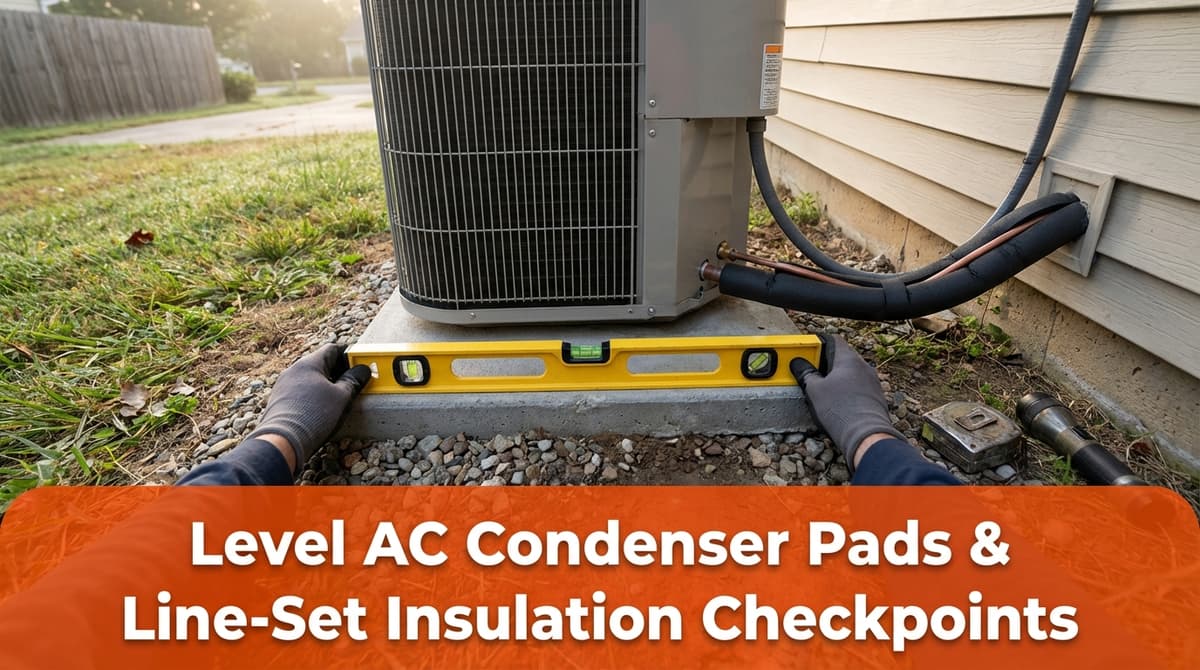
Why One Homebuyer Got Nervous About Her Older AC System
We recently got a call from a homeowner — let’s call her Lisa — who had just closed on a smaller home with an eight-year-old HVAC system. During her inspection, the inspector flagged two things that worried her:
- The outside AC condenser pad was visibly not level.
- The insulation on the refrigerant line set — those “tubes and stuff” going into the house — was thin and deteriorating.
The previous owner had never had the system serviced, and Lisa didn’t want the unit “crapping out” right after she moved in. She’d had bad experiences with other HVAC companies before, so she wanted a team she could trust to take a thorough look and correct the issues the inspector noted.
Calls like Lisa’s are very common when people buy a home with an older system. So in this post, we’ll walk through why a level condenser pad and proper line-set insulation matter, and what checkpoints we recommend for anyone buying a home with an aging HVAC system.
Why a Level AC Condenser Pad Really Matters
The outside AC unit (the condenser) sits on a concrete or composite pad. Over time, soil can settle, tree roots can push, or poor installation can leave that pad tilted or sunk on one side. That’s exactly what Lisa’s inspector saw.
Here’s why that’s more than just a cosmetic issue:
- Compressor strain: The compressor is the heart of your AC. When the unit is out of level, oil inside the compressor doesn’t circulate correctly, which can shorten its life.
- Fan and motor wear: A tilted unit can cause the fan to run off-balance, leading to vibration, noise, and premature motor or bearing failure.
- Refrigerant and oil flow issues: Modern systems are designed to operate close to level. Too much tilt can affect how refrigerant and oil move through the system.
- Drainage problems: An unlevel unit can cause rainwater or condensation to collect where it shouldn’t, increasing the risk of corrosion.
For most homes, we want the condenser to be within about 1/2 inch of level across the pad. A tiny bit of slope for drainage is okay, but if you can see it leaning from your back porch, it’s worth addressing.
How We Correct a Sunken or Tilted Pad
When we go out on calls like Lisa’s, we usually start by having the homeowner send us a few photos so we can arrive prepared with the right tools and materials. Once on site, we typically:
- Check how severe the tilt is and whether the pad is cracked or just settled.
- Carefully lift and shim the pad with appropriate materials, or in more serious cases, re-set or replace the pad altogether.
- Verify clearances so the unit has proper airflow on all sides after leveling.
- Inspect the refrigerant lines and electrical whip to make sure nothing has been stressed when the pad settled.
In other words, we’re not just making it look pretty — we’re protecting the most expensive parts of the system from unnecessary wear.
Those “Tubes and Stuff”: Why Line-Set Insulation Counts
The “tubes” Lisa mentioned are the refrigerant line set — usually a larger insulated suction line and a smaller liquid line running between the outdoor condenser and the indoor coil.
The insulation on that larger line is more important than it looks:
- Energy efficiency: Without proper insulation, the cold refrigerant line absorbs heat from the outside air, so your system has to work harder and run longer to cool your home.
- Comfort and capacity: Poor insulation can reduce how much cooling you actually get at the coil inside, especially on hot days.
- Condensation control: Damaged or missing insulation can lead to sweating and dripping along the line, which can stain siding, contribute to rust, or attract insects.
On older systems, we often see insulation that is sun-baked, cracked, or missing sections. Inspectors flag this for a reason — it’s a relatively small fix that can make a noticeable difference.
What We Do When Line-Set Insulation Is Failing
On a visit like Lisa’s, we’ll look closely at the entire run of the line set from the condenser into the house. Depending on what we find, we may:
- Remove all the old, deteriorated insulation instead of just patching bare spots.
- Install new UV-resistant insulation rated for outdoor use and properly seal all joints.
- Secure the lines so they’re supported and not rubbing against sharp edges or resting directly on the ground.
It’s one of the most cost-effective improvements a buyer can make on an older AC system.
HVAC Checkpoints When Buying a Home with an Older System
Level pads and line-set insulation are a great start, but when we’re called in after a home inspection on an older system, we like to do a full health check. For an 8–12 year-old system, we recommend:
- Condenser inspection: Check the pad, coil cleanliness, contactor condition, fan motor, and overall airflow.
- Refrigerant levels and performance: Make sure the system is charged correctly and cooling to manufacturer specs.
- Indoor coil and blower: Inspect for dirt buildup, biological growth, and proper blower operation.
- Ductwork: Look for obvious leaks, damage, or disconnected runs that could be wasting cooled air.
- Furnace or air handler: Even if you’re focused on AC, we check safety controls, burners (on gas units), and electrical connections.
For buyers like Lisa, who know the system has never been serviced, we often combine this inspection with a preventive maintenance visit so we can clean, test, and tune everything on the same trip.
Simple Things You Can Check Yourself Before We Arrive
While we always recommend a professional inspection on an older system, there are a few quick checks any homeowner can do:
- Stand back and see if the outdoor unit visibly leans to one side.
- Look at the insulated line: is the foam cracked, missing, or sun-rotted?
- Listen when the system runs: do you hear rattling, buzzing, or grinding from the outdoor unit?
- Check your air filter and replace it if it’s dirty or hasn’t been changed in a while.
If you notice any of these issues — especially on a home you just bought — it’s worth having us out to take a closer look before the peak of summer or winter hits.
Buying a Home with an Older System? Let Us Be Your HVAC Guide
Lisa did exactly the right thing: she closed on the house, then immediately took control of the situation by scheduling a professional visit. That gave her peace of mind and a clear plan for what needed attention now and what to budget for in the future.
If you’re in a similar spot with an older HVAC system, we’re happy to be the team you can rely on. We’ll check your condenser pad, line-set insulation, and the rest of your system so you can enjoy your new home without worrying what’s going on behind the scenes.