Why Is My Outdoor AC Unit Freezing Up?
Seeing ice on your outdoor AC unit? Learn the common causes, warning signs, and smart steps to take before calling an HVAC pro to fix a freezing air conditioner.
Why Is My Outdoor AC Unit Freezing Up?
We recently got a call from a new customer — let’s call her Kelly — who was pretty worried about her upstairs air conditioner. We’re an HVAC team that works on systems like this every day, and as soon as she described what was happening, we knew exactly the kind of problem we were dealing with.
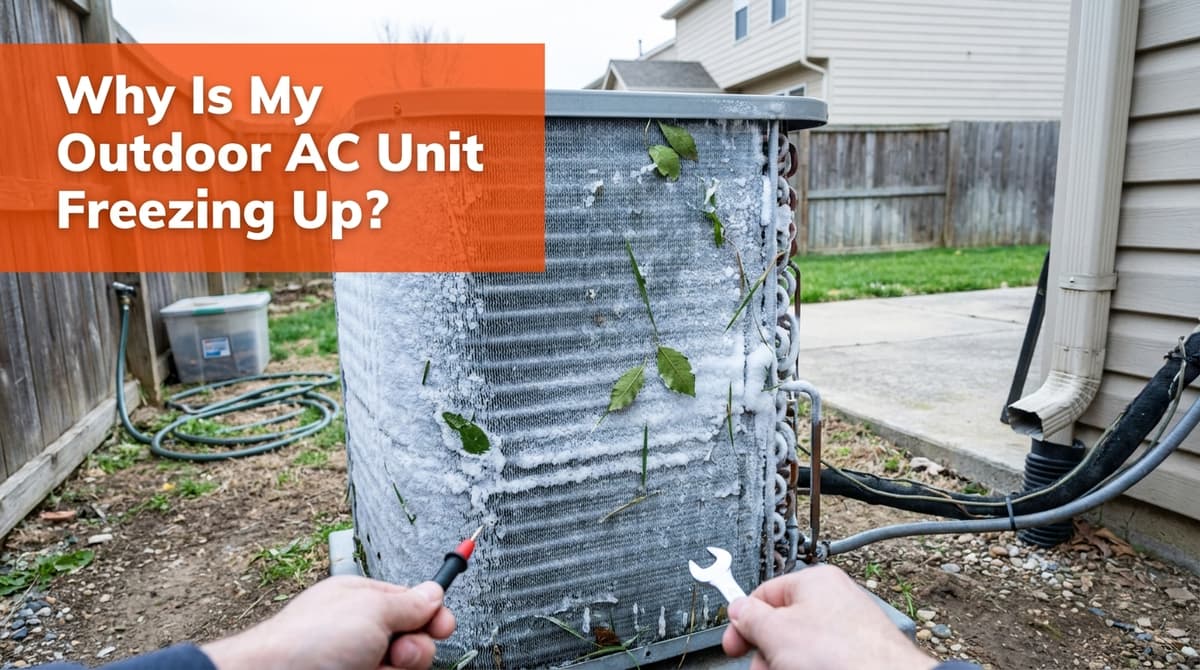
Kelly told us she has two AC systems: one for upstairs and one for downstairs. The downstairs unit was fine, but the upstairs system kept freezing up at the outdoor unit. She could see ice forming on the refrigerant line all the way up to the condenser, and even though the thermostat was set to cool, the upstairs never quite reached the set temperature. The system just kept running and icing over.
If you’re seeing something similar at your home, you’re not alone. We see this kind of freeze-up a lot, and there are some common causes and smart steps you can take before we come out.
First Things First: Is It Really Frozen?
Homeowners usually call us when they notice one or more of these warning signs:
- Visible ice on the copper refrigerant lines at the outdoor unit
- Frost or ice on the outdoor coil (the “radiator-looking” fins)
- Weak or warm airflow from the indoor vents
- AC runs constantly but never reaches the thermostat setting
- Water pooling around the indoor unit after the ice melts
When Kelly mentioned ice all the way to the outdoor compressor and that the upstairs never reached temperature, that’s a textbook sign we see when something in the system is out of balance — either in airflow, refrigerant levels, or how the system is being controlled.
Common Reasons an Outdoor AC Unit Freezes Up
There’s no single cause for every freeze-up, but in our experience, most fall into a few categories:
1. Airflow Problems
Your AC needs a steady flow of warm indoor air over the coil to keep it from dropping below freezing. When that airflow is choked off, the coil can get too cold and ice starts forming.
We often find:
- Dirty air filters — the number one culprit we see in homes
- Closed or blocked supply vents (furniture, rugs, or curtains in the way)
- Dirty indoor evaporator coils that haven’t been cleaned in years
- Blower motor issues that slow or stop airflow
With Kelly’s system, one of the first things we’ll do on site is check those airflow basics. You’d be surprised how often a frozen line starts with something as simple as a clogged filter.
2. Low Refrigerant or Refrigerant Issues
Another common cause we run into is low refrigerant charge. When the system is undercharged — usually because of a leak — the pressure in the system drops and the refrigerant can get too cold, leading to ice on the lines and coil.
Signs we look for include:
- Ice on the small and large refrigerant lines
- Hissing or bubbling sounds near the lines or coil
- Long run times with poor cooling performance
Refrigerant work is not a DIY task. We handle this with proper gauges, leak detection tools, and the correct type and amount of refrigerant for the system.
3. Thermostat and Run-Time Issues
Sometimes the problem is how the system is being controlled. When an upstairs unit is constantly fighting heat gain from the sun or poor insulation, it can run nearly nonstop trying to catch up — exactly what Kelly described.
We commonly see:
- Thermostats set very low (68°F or below for cooling)
- Systems that are slightly undersized for the upstairs space
- Poor attic insulation or attic temperatures that cook the upstairs
That constant run time can expose any weakness in airflow or refrigerant charge and push the system into a freeze-up.
4. Outdoor Coil and Fan Problems
The outdoor unit has to get rid of heat. If the condenser coil is clogged with dirt, cottonwood, grass clippings, or the fan isn’t moving enough air, the pressures and temperatures inside the system can get out of their normal range and contribute to freeze-ups.
When we arrive on a call like Kelly’s, we always inspect the outdoor coil and fan motor as part of the diagnosis.
What You Should Do Right Away If Your Outdoor Unit Is Frozen
Before we even come out, there are a few safe steps we usually talk homeowners through on the phone:
- Turn the cooling off at the thermostat.
Switch the system from “Cool” to “Off” so it stops trying to run while it’s iced up. - Turn the fan to “On.”
This lets the indoor blower move air over the frozen coil and helps melt the ice more quickly. - Check and replace the air filter.
If it looks dirty, swap it out. This alone may prevent the problem from coming right back. - Clear supply and return vents.
Make sure furniture, boxes, or rugs aren’t blocking vents upstairs or downstairs. - Give the system time to fully thaw.
It can take a few hours for all the ice to melt, especially on a heavily frozen system.
We don’t recommend trying to chip away the ice or using tools on the coil or lines. That’s an easy way to cause expensive damage.
How Regular Maintenance Helps Prevent Freeze-Ups
Kelly originally called us asking for a tune-up, and that’s something we always encourage. Routine maintenance is one of the best ways to avoid surprise freeze-ups in the first place.
During a typical AC tune-up, we:
- Inspect and clean the indoor and outdoor coils
- Check and replace air filters as needed
- Verify blower motor performance and airflow
- Clean the outdoor condenser and straighten fins where possible
- Check electrical connections and capacitors
- Measure refrigerant pressures and temperatures to spot early issues
Catching a weak capacitor, a slowly clogging coil, or a small refrigerant problem during maintenance is a lot cheaper — and less stressful — than dealing with a full system freeze-up on a hot afternoon.
What to Expect When We Come Diagnose a Frozen AC
When we schedule a visit for a situation like Kelly’s, we walk through a clear diagnostic process so we’re not just “adding refrigerant and hoping.” Here’s what you can expect from us during that appointment:
- System interview: We’ll ask about when the problem started, which areas are most affected, and how the thermostat is usually set.
- Visual inspection: We look at the indoor and outdoor units, ductwork, filter, and vents for obvious airflow problems or damage.
- Airflow and electrical checks: We test the blower, inspect the evaporator coil, and verify voltage and amp draw on key components.
- Refrigerant diagnostics: We connect gauges, measure superheat/subcooling, and determine whether there’s a refrigerant issue or potential leak.
- Clear recommendations: We explain what we found, what needs to be fixed now, and what can be monitored or planned for later.
Our goal is always to get to the root cause, not just thaw the unit and leave you wondering if it will happen again next week.
When It’s Time to Call a Professional
If your outdoor AC unit keeps freezing up even after you’ve changed the filter, checked the vents, and let it thaw completely, it’s time for us to take a look. Persistent ice almost always points to a deeper issue that needs proper tools and training to fix.
Whether you’re dealing with a frozen upstairs system like Kelly’s, uneven cooling between floors, or an AC that just won’t shut off, we’re here to help. We work on these problems every day, and we’re happy to walk you through safe steps to try over the phone and then come out to get your system running the way it should.
If you’re seeing ice on your outdoor unit right now, turn the cooling off, set the fan to “On,” and then reach out to schedule a visit. We’ll help get your home comfortable again — without the ice show in the backyard.